作成者別アーカイブ: Jlaf_staff

ルカ・バルチェローナ「Take Your Pleasure Seriously」 2回目(全3回)

「Take Your Pleasure Seriously」手書き文字を究める道

個人的
プロジェクト

私は時々、自分の深い欲求に耳を傾けずにはいられなくなることがあります。一日が始まっても、すべてを中断して一人きりになり、ドラフティングテーブルの前に座り、しばらくの間心の中にありながら時間がなくて書けなかった文章を書きたくなるのです。そうすることで気持ちがすっきりして、前に進み、一日に向き合えるのです。

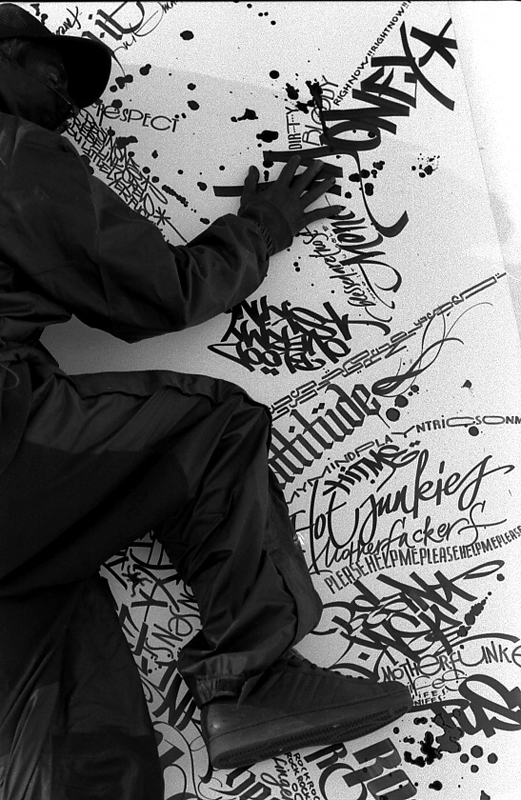
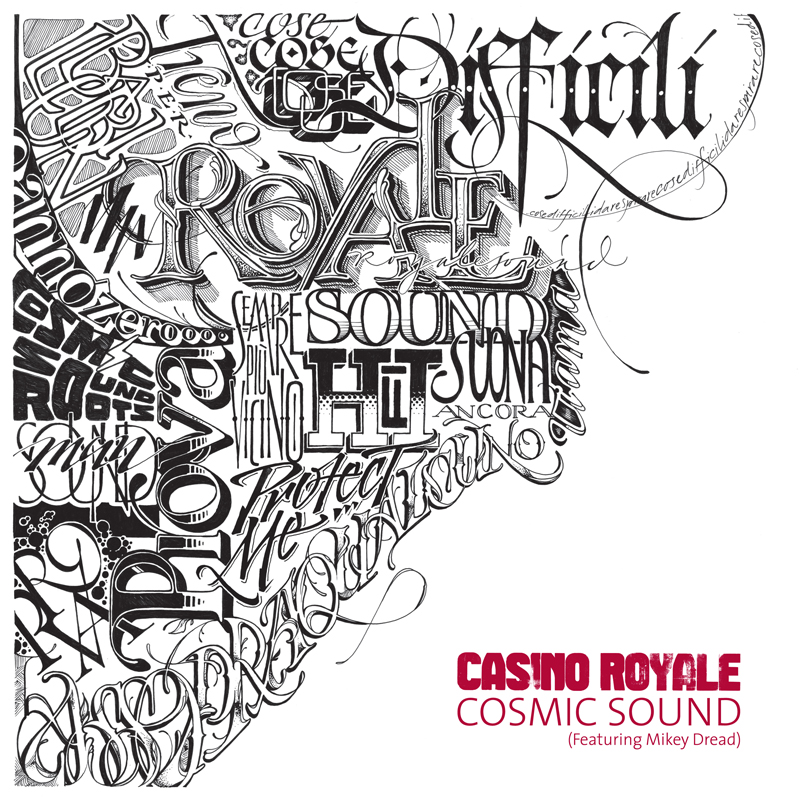
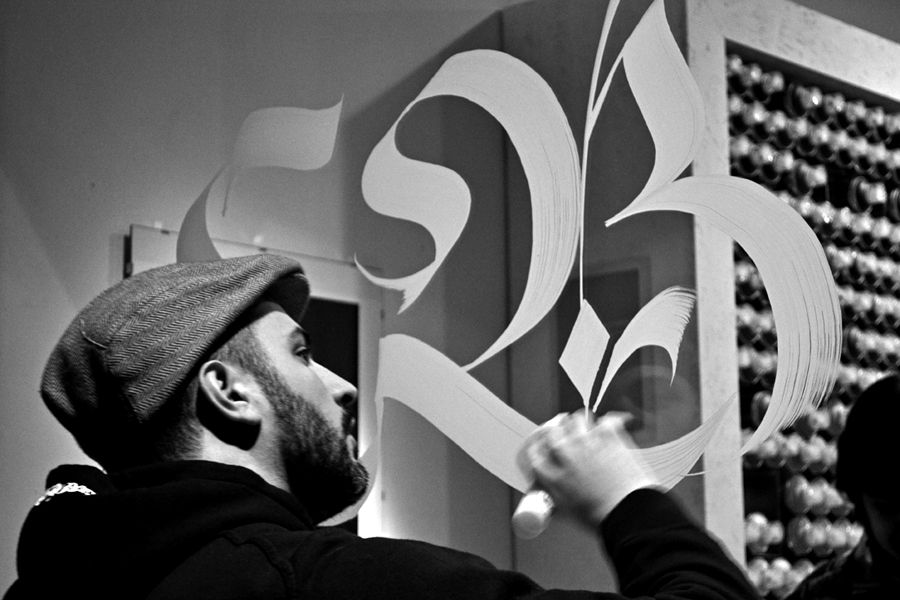
はっきりとした目的がなくても時間を見つけて自分のために何かをするということは、いかなるクリエイティブな仕事をする上でも大変重要です。ここ数年、私のスタジオの仕事量が増大するにつれて、何にも拘束されないで、自分の個人的な活動に費やせる全くの自由時間はますます少なくなってきました。そのことに気づいたとたん、私は仕事のペースを落として自分の好奇心を再発見する時間を見つける必要があると思いました。町や、野外マーケット、まだ訪れたことのない都市の看板などにはアイデアがいっぱいで、外に出てそれを探さなければいけません。ですから私は、例えば、壁いっぱいに文字を書くようなイベントへの参加の招待はたいてい引き受けます。それが自動的に引き金となって、新しい研究、言ってみれば、将来影響を残すであろう何かにつながるのです。望みうる最上の結果は、新しい文字の形を見つけるか、様々な書体間で融合したものを創作することです。なぜなら、ライティングはその性質上、絶えず進化するものだからです。
2_1-1 2_1-2 

印刷技術が登場する前の何世紀かの間、カリグラファーは書物に仕える職人と見なされていました。写筆者は必ずしも特別な技術は必要なく、他の人が読めるように書物を単に複製しさえすれは良かったのです。明らかにそれが当時の基準でした。実を言えば、数十年前まで、それと同じ技術が学校で教えられていました。今では信じられないことですが、人々は、博物館の陳列ケースに展示されているマニュスクリプトがどのように作られたのかを学んでいたのです。

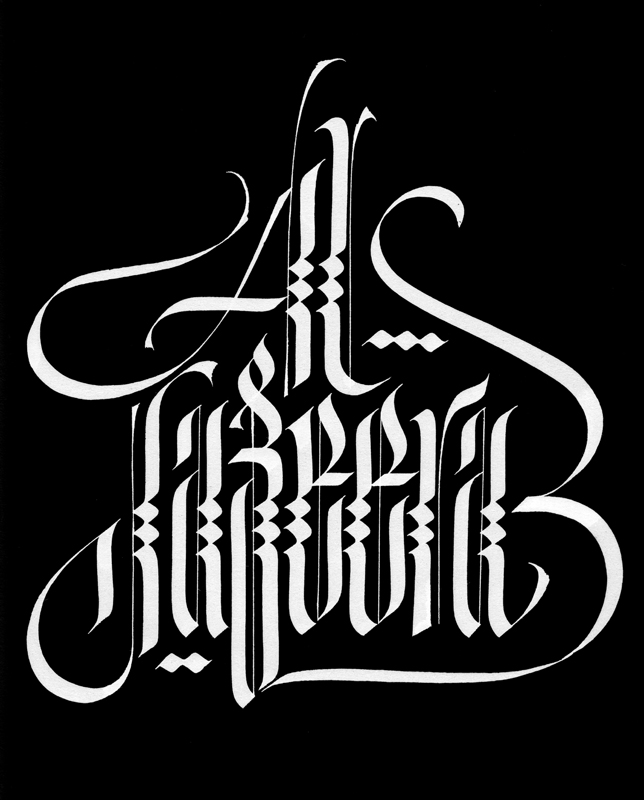
いわゆる表現的カリグラフィーや、ルーリングペン(烏口)のような今日私たちが使っている道具類は、フリードリヒ・ポップルや ヴェルナー・シュナイダーのような巨匠やその他多くの人のおかげで知られるようになりました。彼らは、1950年代半ば、それ自体で表現的アートの形としてのカリグラフィーの基礎を構築しました。彼らは、見た目は単に一瞬で行き当たりばったりにも見える、流れるような制御された線の動きで紙面上に道具を走らせることから始めました。彼らが使う道具は平ペンほど緻密ではなく、(書く道具としては)より未発達なものでしたが、すべてが文字の成り立ちについての深い知識をもってなされていました。
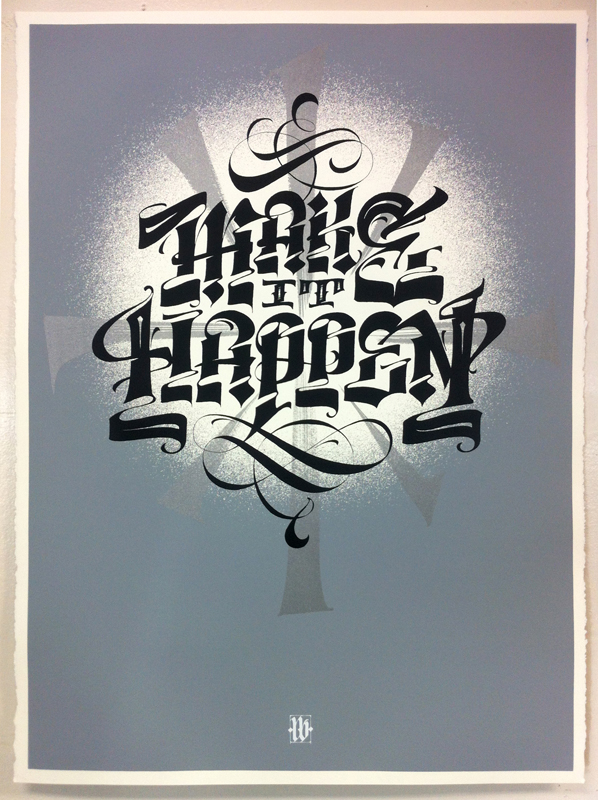
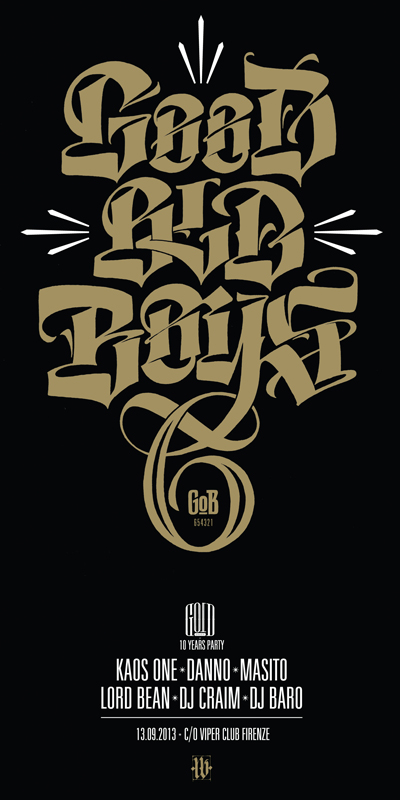
2_2-1 2_2-2

出来るだけたくさんの歴史的書体を知り、加えて絶え間なくトレーニングをし、好奇心と自発性を持ち続ければ、自分自身のスタイルだと認識できる(待ち望んだ)瞬間に到達出来ます。「あなたがそれをやったの?そう思いましたよ!」と誰かに言われるやいなや努力は報われます。何年もかかるかもしれませんが、それだけの時間をかける価値のある道のりなのです。また自分の作品を、達人、自分の前を進んできたすばらしいカリグラファー達の作品と比較して、自分の技術レベルを大局的にとらえることも重要です。真に独自の表現方法は皆、いつも、その作者の背景や受けた影響を表しています。あなたの仕事を判断する人がそのことに精通していなければ、あなたを腕のある人だと思いがちです。それはあなたの自尊心を高めてはくれますが、良いカリグラファーを生みだしはしません。

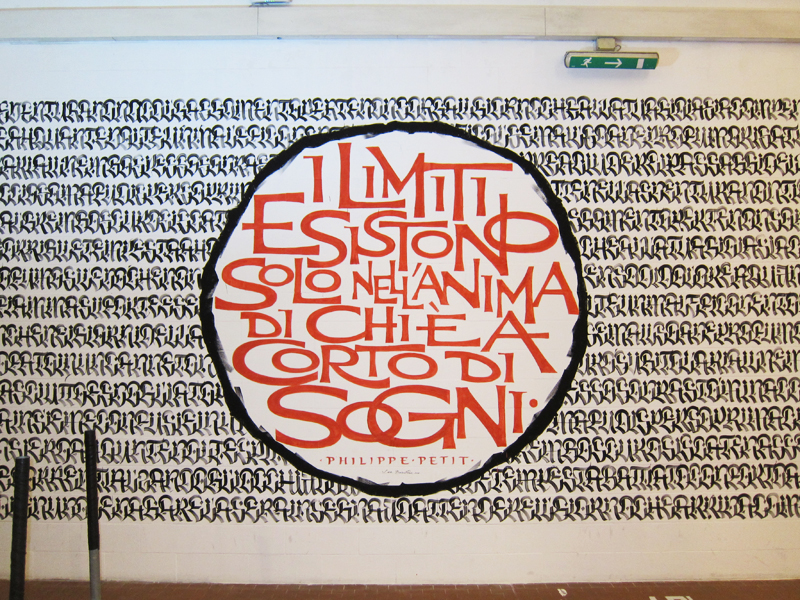
私は、新しい作品に取り掛かるときはいつも、なんて何も知らないのだろう、学ぶことがなんて多いのだろうと気づきます。何百種類もの紙やインクがあり、与えられた文章にはどの道具や文字のスタイルが最適だろうかと考えます。やる気や、直感、知識がすべて合わさって、熟練した手が動くのです。それぞれの紙には最適のペンやインクの濃さがあります。大きな壁面では、課題が増大します。空間認識は、小さな紙の上で作業するする時とは全く違います。後ろに下がって、寸法を目測し、(時には何回も)はしごを上り下りしていると、体中が何日も続けて痛みます。時には、自分の目を信じるだけでよいこともあり、それですべてがきちんと釣り合いがとれるように出来れば2倍の満足感が得られます。
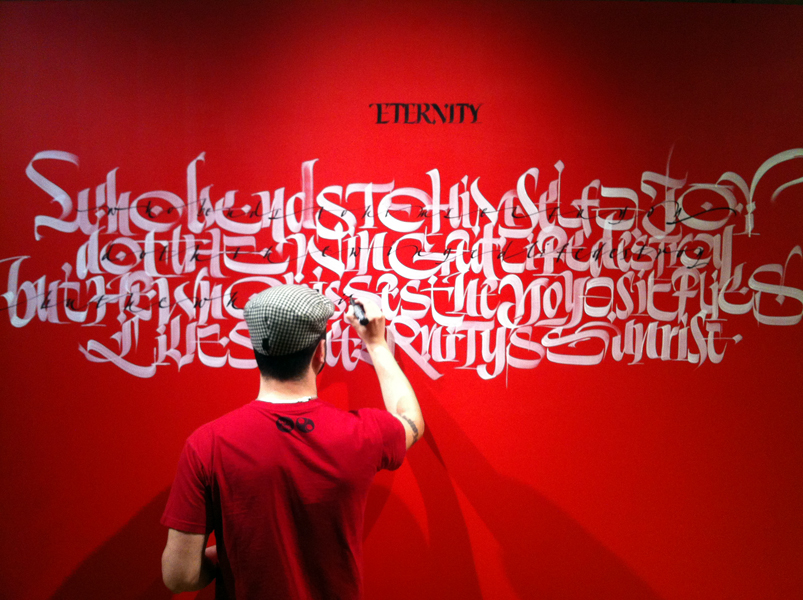
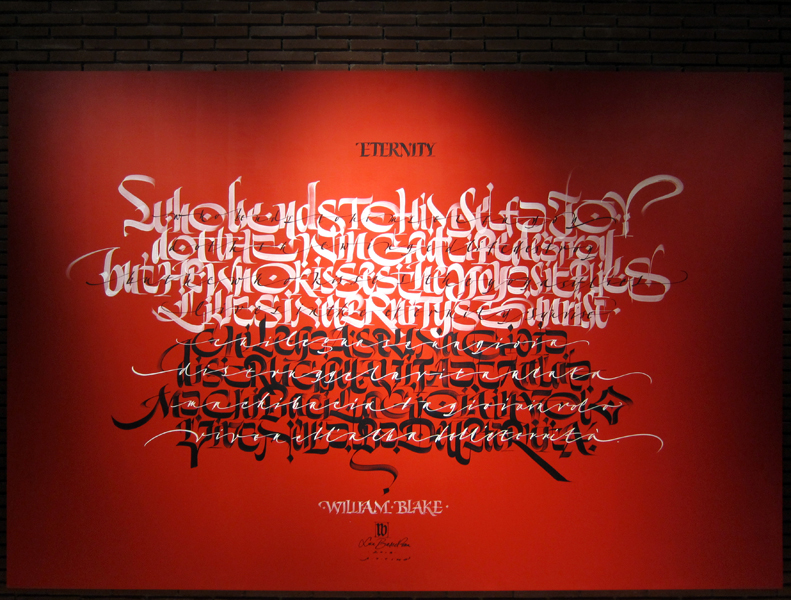
2_3-1 2_3-2

私は、罫線を引くことに関して怠慢なことで目が訓練されて、罫線なしで書けるようになりました。最初はすべての単語がうまくおさまるかどうか分かりません。ちょうどよいサイズの筆を選び、必要に応じて字を詰めたり広げたりしなければなりません。あるいは、事前に参照物を用意し、レイアウトを投影したり、文字を鉛筆でトレースすることも出来ます。ひとつ確かなことは、実は段取りをすればするほど、新鮮さが減ってしまうということです。私は最近気づいたのですが、失敗したり、紙を汚したり、ぼんやりして1文字忘れたりしても、最終的にはそういうことは何も悪くないのだということがわかる楽しみを再発見しました。

私は、作品をレタッチすること、言ってみれば、私たちの本来の姿ではない完璧さを求めることを強制されていると感じるのは大嫌いです。それは、そこから自分を自由にしようとする欲求なのです。幅何メートルものイラストを描けば、ほんの少しオリジナルスケッチから変更しても誰も気づかないでしょう。しかし、もし字が曲がっていたら、気づくでしょう。ですから、私たちは「空間のアーティスト」(artists of emptiness)でなければならないのです。これはトム・ケンプ のすばらしいワークショップで彼から学んだことです。「無」(the nothing)はすでにそこに、つまり文字と文字の間の空間にあり、テキスト上では文字そのものより重要なくらいです。文字は完璧である必要はないのですが、文字間のスペースこそが調和がとれ、少なくとも説得力がなければなりません。

ルドルフ・コッホの福音書のことを思い出します。その非常に美しいページはひと文字ずつ見ると、ゆがんでばらついて見える文字で出来ています。しかしながら、その、文字がぎっしり書かれたページは生き生きとしていて調和が取れて見えるのです。ですから、もう一度言いますが、最も大切なことは、作品全体なのです。
2_4-1 2_4-2

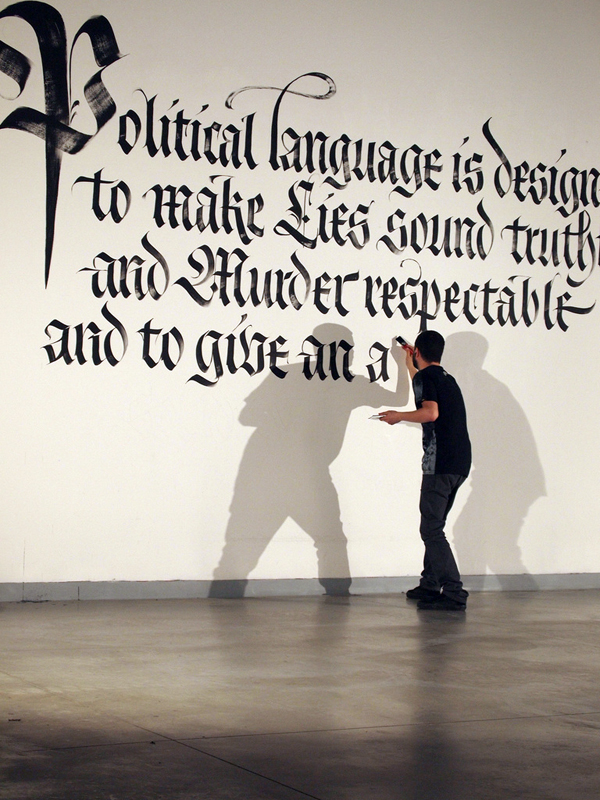
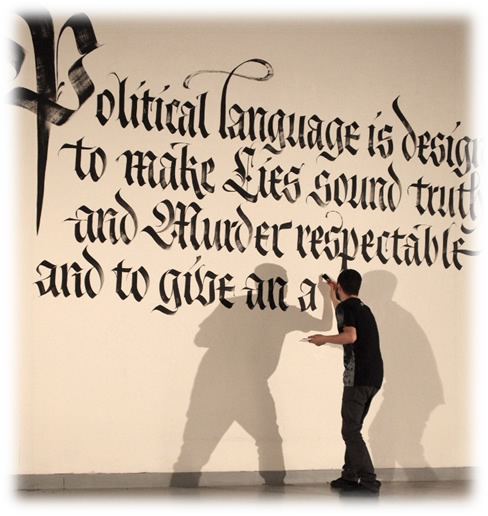
また、何を書くか、内容も考慮しなければなりません。時には、文章の方からやって来ることがあります。先日、私はフィレンツェで壁に字を書かなければならなかったのですが、何を書くか決めかねていました。地元の書店でジョージ・オーウェルの本を見つけたのですが、その背表紙が書棚の他のすべての本より目立っていました。私は、その本を手に取り、タイトルを見ました。『Why I Write』(私が書く理由)。これだ、と思いました。カバーの宣伝文が、政治的な言葉づかいの、二枚舌で不誠実な性質について語っていました。これはその時の私にぴったりで、私はそれを書くことに決めました。テキストの選択はとても個人的な行為です。私は頑固な無神論者なので、いつも聖典や聖書の引用文は避けてきました。しかし、それらはカリグラフィー作品の最もよく使われる内容であり、技巧的に制作される作品でもあるのです。陳腐な表現に陥ったり他人のものばかり引用するのを避けるのは難しいことですが、本当に自分のもの、自分の一部分、そして人生の中で鍵となった瞬間にその場にあったことを書くのが大切だと思います。例えばほとんど無名の作詞家の歌の一節でもいいのです。そうすれば、自分の作品と共にその音楽も広める手助けが出来るでしょう。

何も書かれていない紙への恐怖心を克服する方法がひとつだけあります。それにまっすぐ向き合い、黒いマークから始めるのです。そうすれば、そのマークがきっと着地点を見つけるでしょう。そしてきっと、学ばなければならないこともまだまだあることでしょう。
2_5-1 2_5-2

カリグラフィーを教えること:
自分も学ぶということ

私が初めて実際にカリグラフィーと触れたのは、1999年、イタリアカリグラフィー協会(Associazione Calligrafica Italiana)でした。その協会のことは、当時運営チームの一員だったフランチェスカ・ガンドルフィを通して知りました。インターネットはまだ普及しておらず、情報は、その活動や開設コースが掲載されたチラシの形で届きました。私はすでに独学でカリグラフィーをやっていましたが、このような熟練カリグラファーが、まさに私の地元にいることを発見し、最初にフランチェスカ・ビアゼットーンのイタリック体のコースを受講した時、私にとって全く新しい世界が開けました。

私の取り組みは、依然として、ペン字の訓練というより、グラフィティと強く結びついたものでした。明らかに、その2つの間に大きなギャップ、特に世代間ギャップを感じていました。それでいて、グラフィティライターとカリグラファーはどちらも、方向はしばしば反対ですが、同じレターフォーム(文字の形)に対する情熱によって突き動かされています。いずれにせよ、私は、この2つの世界のつながりを見つけたいと思っていましたし、そのためには古典的なカリグラフィーの様式を深く掘り下げて探求しなければならないことが分かっていました。ですから、出来るだけ多くのコースを取り、歴史的な書体を勉強し、自分のツールキット内の道具やその使い方を多様化させました。
2_6-1

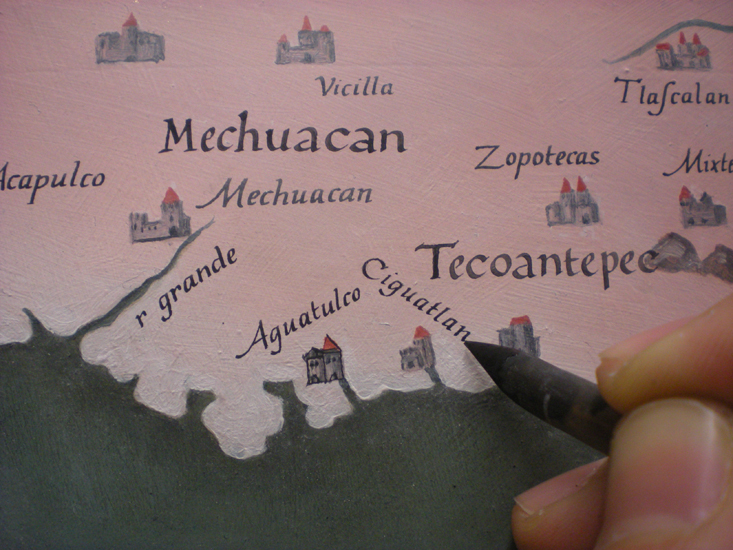
幸運にも、私は、類いまれな独自性を持った偉大な先生たちに出会うことができました。ジョヴァンニ・デ・ファッチョはとても純粋で無尽蔵の資質を持つ真の「ルネッサンス人」です。私は彼から、ゴシックレタリングやその表現上の可能性について多くを学びました。彼の贅沢でクリエイティブなワークショップは忘れがたく、時を超越した雰囲気がありました。イタリアのカリグラフィーの第一人者であるアンナ・ロンキは、厳密さと信じられないような軽やかさがにじみ出るチャンセリー体(イタリック体)を書きます。そして、彼女はペンを走らせて、決して大げさでも場違いな感じでもないエレガントなフローリッシュを生み出します。彼女の特徴は文字と伝統につての深い理解であり、また、掘り下げた効果的な教授法です。彼女は常に第一線で自分のカリグラフィーの考えを守り、ここ数年は、最新の手法を通して学校にハンドライティングを取り戻すという難しい任務を引き受けています。ジェイムズ・クラウ は私に町のいたるところで見つかる文字、歴史をしっかり宿す文字への好奇心を教え込んでくれました。私がよく道路の真ん中で立ち止まり古びた看板の写真を撮るのは彼のせいです。彼はとても魅力的な人で、記憶に残るレッスンを情熱的に進めますが、一方で、遠慮のない正直さで建設的な批判も行います。ルチオ・パッセリーニのおかげで、凸版印刷や、木版印刷、そして質量ともに「良い時間」の価値を正しく理解するようになりました(彼のスタジオが「良い時間」と呼ばれているのには理由があります)。これが本を印刷するには必要なのです。

私が知るようになったカリグラフィー界は多くの卓越した人々で構成されており、その中にはイヴァナ・トゥバロや フランチェスコ・アスコリ、 アンナ・スケッティン、 イヴァノ・ジゾッティ、 マルコ・カンペデッリなどがいます。彼らはそれぞれ、何年にもわたって、確固たる情熱を持ち、懸命に、また、積極的に関与することでカリグラフィーやタイポグラフィーに貢献してきました。イタリアカリグラフィー協会は1991年に創設されました。この協会は、高いクオリティーのカリグラフィー、つまり、20世紀初頭のエドワード・ジョンストンから現在まで受け継がれているカリグラフィーを、イタリアのグラフィックデザインおよび広告界にもたらすことに重要な役割を果たしましたが、それは、まずミラノから始まり、ほうぼうへと広がりました。この協会のサポートがなければ、私は、巨匠達から直接、こんなにたくさんのことを学ぶ機会は持てなかったでしょう。
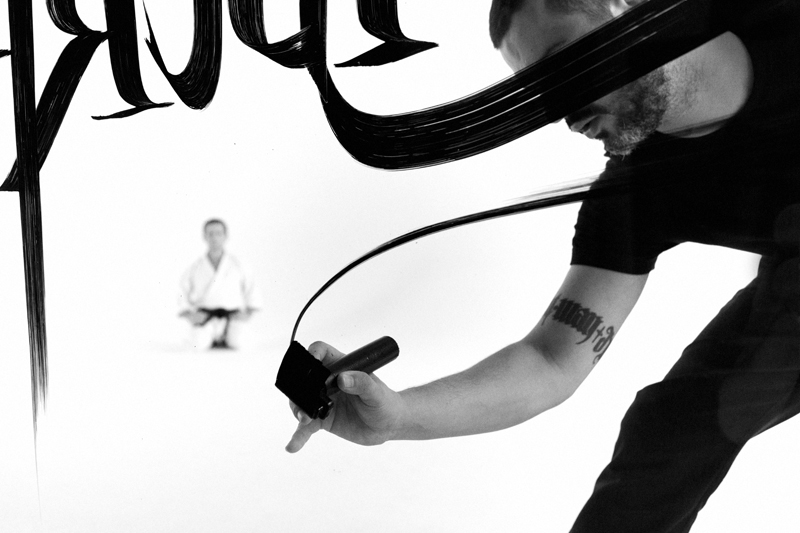
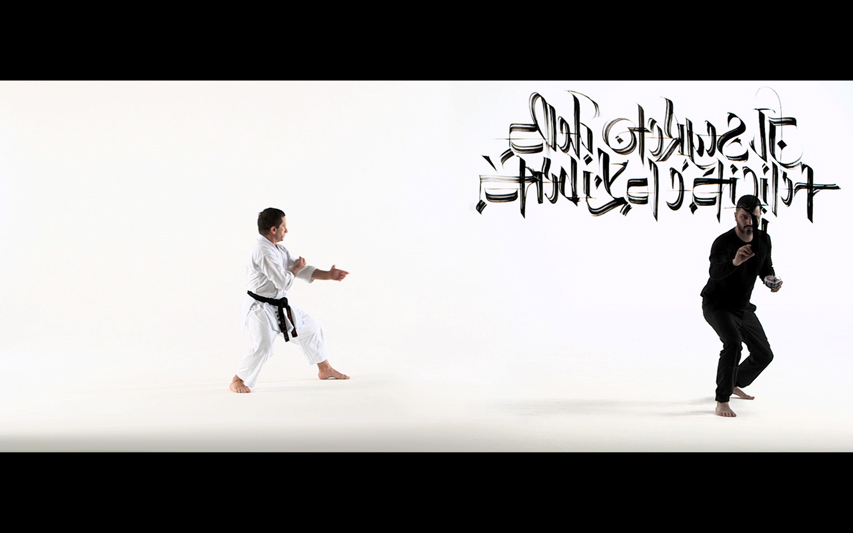
2_7-1 2_7-2

その創設者達は、イタリア国内で教える前に、イギリス、ベルギー、アメリカといった海外で学びました。彼らは、帰国すると、ハンス・ヨアヒム・ブルゲルトやトーマス・イングマイア、ハッサン・マスディ、 クラウス・ペーター・シェッフェル 、トム・ケンプ、ユアン・クレイトンなどのカリグラファーを招聘しました。彼らのコースはいつも、熱心で資金を他に頼らないボランティアによって運営されています。その後現れた団体も同様の活動をし、同じようにカリグラフィー界に大きな貢献をしました。その中には、トリノにピエロ・デ・マッキや マッシモ・ポレッロが率いるカリグラフィーグループが複数、ローマにモニカ・デンゴが運営するグループがあり、そしておそらくその他にも私が個人的にはまだなじみのない団体がたくさんあるでしょう。彼らの努力がなければ、今日、イタリアでカリグラフィーについて語ろうとすると、誰もがゼロからカリグラフィーとは何かを説明しなければならないでしょう。

私が初めて教えるよう依頼されたとき、うまくいくという自信が十分あったわけではありませんでした。2、3ヶ月かけて、フラクトゥール体のコースを準備し、どんな授業になるか心配でした。そんな私の心配に反して、クラスはとてもうまくいき、多くのコースが後に続くことになりました。最初に気づいたことは、生徒に教えるためには、カリグラフィーをするという純粋な喜びをどうやって伝えるかを知っていなければならないということです。そのためには、十分な寛大さとエネルギーが必要です。なぜなら、ワークショップが終わる頃には疲れ果ててしまうからです。時間がたてば、自分自身の教授法が確立します。そして、同じことを繰り返すのではなく、新しい主題を提示できるように違った角度からの研究をして、生徒の興味、そして、何よりも自分自身の興味を再び引き出していくようにしなければなりません。
2_8-1

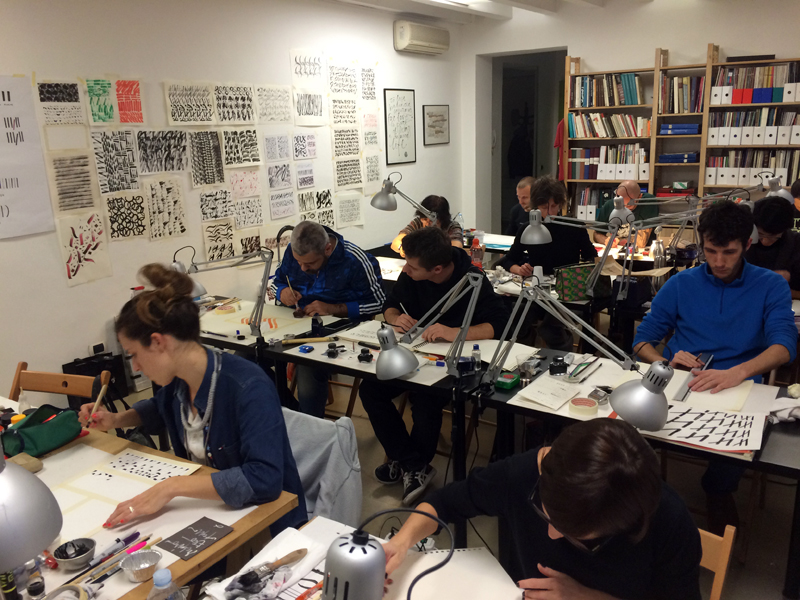
私はいつも、それぞれのコースの参加者の多様性に驚きます。好奇心の強いアマチュアから、熱心なグラフィティライター、愛書家、インク壺にノスタルジーを感じる女性、若い頃指で机をこつこつたたいていた女性教師、船乗りのように毒づくタトゥーアーティスト、そして、キーボードにうんざりして再びペンを持ちたくなったジャーナリストにいたるまで様々です。そして、私のコースは学生や新進気鋭のグラフィック・デザイナーといった、かなり若い人が増えてきていることも注目すべきことです。教えることは明らかに、特権的に与えられた学ぶ機会でもあります。そして、教えに行くことがなければ見られなかったような所を旅する機会だけでなく、新しい人出会い、新しい友と知り合う機会も得られるのです。

書くということは、ほかの学習訓練と同じように、受け継いでいく限り存在し続けます。教えるということは、自分がスタートしたのと同じ道を進む可能性を人にも与えることを意味します。それは、一周して元に戻るということです。カリグラフィーは遠くからやって来て、特にイタリアでは深いルーツを持つアートです。カリグラフィーの現在(特にデジタル時代における)や、願わくば長い未来をたどっていけるように、皆さんはその歴史や過去を知りたいと思うに違いありません。

--------------------
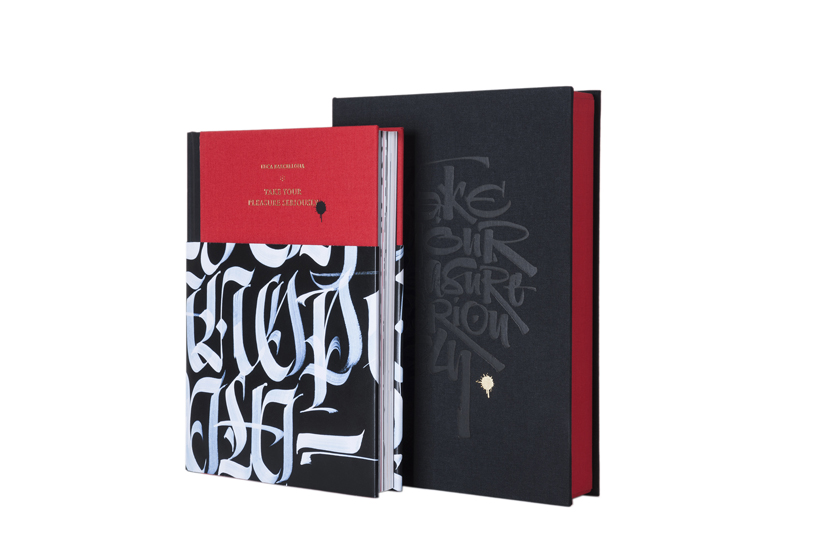
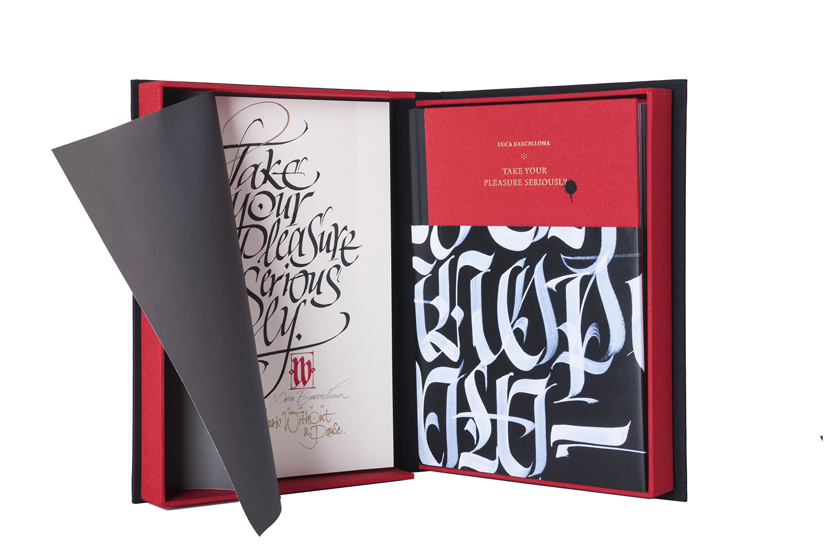
この記事はルカ・バルチェローナの著書『Take Your Pleasure Seriously』(2012)に 掲載されたものです。
7-1 7-2

--------------------
image5

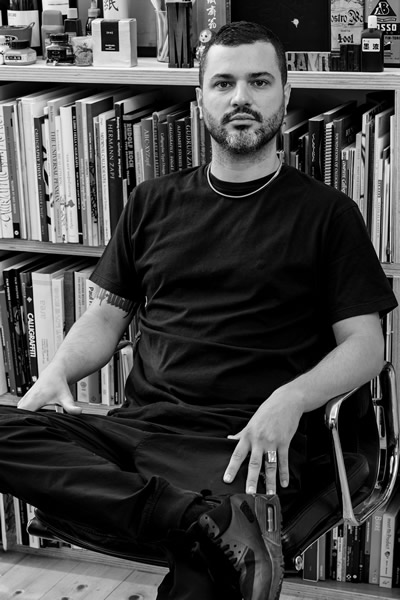
Luca Barcellona ルカ・バルチェローナ

1978年生まれ。イタリアのミラノにスタジオを持つグラフィックデザイナー、カリグラファー。文字は彼の創作活動において最も重要な要素である。 イタリアカリグラフィー協会にてカリグラフィーの教鞭をとるとともに、アメリカ、オーストラリア、ブラジル、ドイツなど世界各地でワークショップの講師を務める。その活動が示す通り、文字と言葉に関わる伝統的芸術の手書き技術をデジタル時代の表現手段と共存させている。2003年に、ラエ・マルティー二、マルコ・クレフィッシュと、カリグラフィーを含む手書き文字とイラストのライブパフォーマンス集団レベルインクを立ち上げる。2009年には、スイスのカリグラファー、クラウス・ペーター・シェッフェルと共に、スイス国立博物館において、1569年に作られた大きな地球儀を、当時と同じ道具(羽ペン・自然素材で作られたインク)を使った カリグラフィーで、原作に忠実に複製する作業の実現に寄与した。文字のデザイン依頼を受けたブランドとして、Carhartt、Nike、 Mondadori、Zoo York、Dolce & Gabbana、Sony BMG、Seat、Volvo、Universal、Eni、Mont Blanc、Wall Street Instituteなどが挙げられる。また、最近参加した展示には、プラハで開催された『Stuck on the City』、ドイツのCarhartt Galleryで開催された『Don't Forget To Write』がある。多くの個別のプロジェクトへの参加と同様に、彼の作品は多くの出版物に登場している。自身の服飾ブランドLuca Barcellona Gold Seriesを2010年に立ち上げ、最近では初の単行本である『Take Your Pleasure Seriously』を彼自身がメンバーを務めるLazy Dog Press社より刊行している。彼の文字デザインに対する取り組みは、グラフィティの経験から伝統的なカリグラフィーへと導かれ、更に大きな壁に描く ウォールペイント、タイポグラフィーそして活版印刷まで広がっている。
ウェブサイトhttp://www.lucabarcellona.com/

翻訳:深尾全代  
   清水裕子

“Take Your Pleasure Seriously” by Luca Barcellona -2-

「Take Your Pleasure Seriously」The way of handwriting

personal
projects

I occasionally feel a deep need I can’t help but heed: I start my day and just want to shut it all down, isolate myself, sit down at the drafting table and write out the sentence I’ve had in mind for awhile, the one I’ve never had time to write. That makes me feel better, and I can then move on and face the day.

Finding the time to do something for yourself, with no precise aim, is vitally important in any creative line of work. Over the past few years, as my studio work has intensified, the utterly free, unfettered moments I’ve been able to devote to my own personal work have grown increasingly rare. As soon as I realized that, I understood that I needed to slow down and take the time to rediscover my curiosities. So many ideas are out there—on the streets, in open-air markets, in the signs of cities you haven’t been to yet—and you have to go out and look for them. That’s why I usually accept invitations to participate in events that, for instance, call on me to write across an entire wall; it’s like an automatic trigger to do new research, something that will leave its own mark. The best you can hope for is to find new forms of lettering, or create a fusion between various styles, since writing is, by its very nature, in a continuous state of evolution.

2_1-1 2_1-2

In past centuries, before the advent of printing, most people conceived of the calligrapher as an artisan at the service of the text. Copyists didn’t necessarily need any special skills, they just had to reproduce the texts in such a way that others might read them. Obviously, that was the norm back then; truth be told, up until a few decades ago those same skills were taught in schools—it’s hard to believable now, but people used to learn how the manuscripts on view in museum vitrines were made.

So-called expressive calligraphy and the instruments we still use today, like ruling pens, are known in part thanks to masters like Friedrich Poppl, Werner Schneider, and many others who, in the mid-fifties, laid the foundations of calligraphy as an expressive art form in its own right. They began by moving across the page with fluid, controlled gestures that only appeared quick and casual; their instruments were less precise and more rudimentary than nib pens, but everything was done with a deep knowledge of how letters are made.

2_2-1 2_2-2

Knowing as many historic styles as possible, plus constant training and a dose of curiosity and initiative, can lead to the (hoped-for) moment in which your own style becomes recognizable. The hard work pays off as soon as someone asks, “Did you do that? I thought so!” It can take years, but it’s a long road well worth the haul. It’s also essential to compare your work and keep your skill level in perspective by measuring it against the masters, the admired calligraphers who came before. Any truly personal style invariably shows its maker’s background and influences. It’s easy to think you’re good if those judging your work aren’t familiar with the subject; that can boost your self-esteem, but it doesn’t make for a good calligrapher.

When I approach a new piece, I always realize how little I know and how much
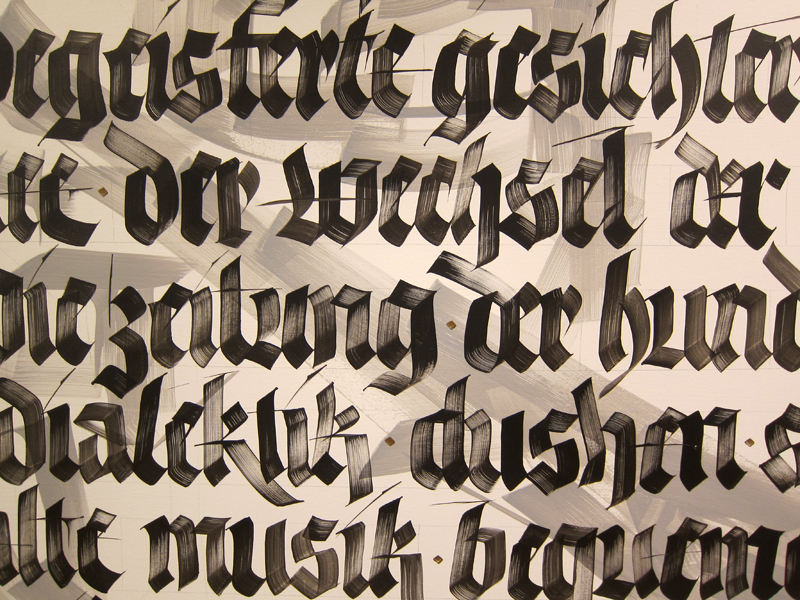
I have yet to learn. There are hundreds of different kinds of paper and ink: what instrument and what style will be best suited to the given text? A combination of motivation, instinct, and knowledge all come together to move the trained hand. Each paper has its own ideal pen, its own ideal ink dilution. On large walls, the challenges multiply: the perception of space is entirely different from the one you have when working on a small page, you have to step back, take measurements, go up and down a ladder (sometimes over and over again), and your whole body aches for days on end. Sometimes you can also just trust your eye, and then you get twice the satisfaction if you manage to keep everything straight and in proportion.

2_3-1 2_3-2

My own laziness with regard to ruling lines led me to train my eye so I can do without it. You can’t know, at first, whether all the words will fit; you have to choose the right brush size, and condense or expand things as necessary. Or you can set up a reference in advance, projecting the layout or tracing the letters in pencil. One thing’s for sure: the more construction underneath it all, the less fresh it will feel. One of my own recent finds was rediscovering the pleasure of making mistakes, of messing up the page or absentmindedly forgetting a letter, and ultimately understanding that there’s nothing wrong with that.

I hate feeling forced to retouch a piece or attempt a perfection that simply isn’t in our nature—that’s a need I aim to free myself from. If you do an illustration many meters wide, no one will notice if you change it a bit from the original sketch. But if your writing is crooked, everyone will notice. So we have to be “artists of emptiness,” as I learned from Tom Kemp in one of his amazing workshops. The nothing is already here, in the emptiness between the letters, and in a text it’s almost more important than the letters themselves: they don’t have to be perfect, but the space between them does have to be harmonious, or at least convincing.

Rudolf Koch’s Gospel books come to mind; their exquisitely beautiful pages are made up of letters that appear distorted and loose when looked at one by one. And yet those dense pages of writing appear lively and harmonious. So the most important thing, again, is the work as a whole.

2_4-1 2_4-2

You also have to consider the content—what to write. Sometimes a text comes to you. A while ago I had to write a wall in Florence, but hadn’t yet decided what. I found a book by George Orwell in a local bookstore, its spine stuck out from all the others on the wall. I took it out and looked at the title: Why I Write. That’s it, I thought. The blurb on the cover spoke of the duplicitous, false nature of political lingo. It was perfect for me at the time, and I decided to write it. Choosing a text is a highly personal act: as a staunch atheist, I’ve always steered clear of sacred texts and biblical quotations, but they’re some of the most common content of calligraphic work, even skillfully executed pieces. It’s hard to avoid falling into cliché or constantly quoting others, but I think it’s important to write something that’s truly yours, that’s a part of you and has been there at key moments in your life. It could be a line taken from a song, maybe by a little-known songwriter—in which case you’d help spread the music as well as your own work.

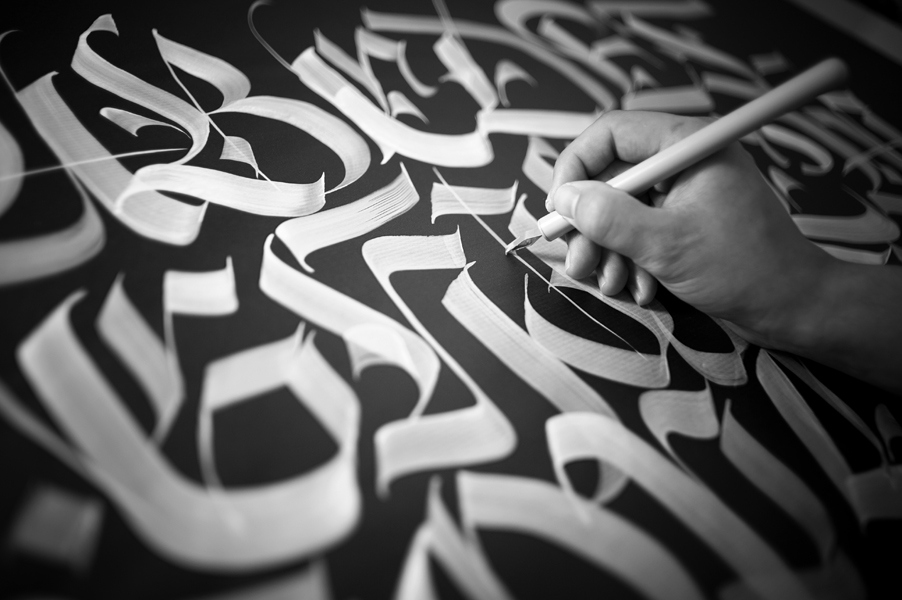
There is only one way to overcome the fear of the blank page: face it head-on, and let a black mark make its start, certain that it will find its end. Certain, too, that there’s still so much more to learn.

2_5-1 2_5-2

teaching calligraphy:
coming full circle

My first real contact with calligraphy was through the Associazione Calligrafica Italiana (ACI, the Italian Calligraphic Association) in 1999. I’d heard about it through Francesca Gandolfi, who was part of its administrative team at the time. The Internet wasn’t yet widespread, so info arrived in a flyer showcasing their activities and course offerings. I was already doing calligraphy as an autodidact, but when I discovered that there were such expert calligraphers—in my hometown, no less—and I took my first course on Italic lettering with Francesca Biasetton, a whole new world opened up for me.

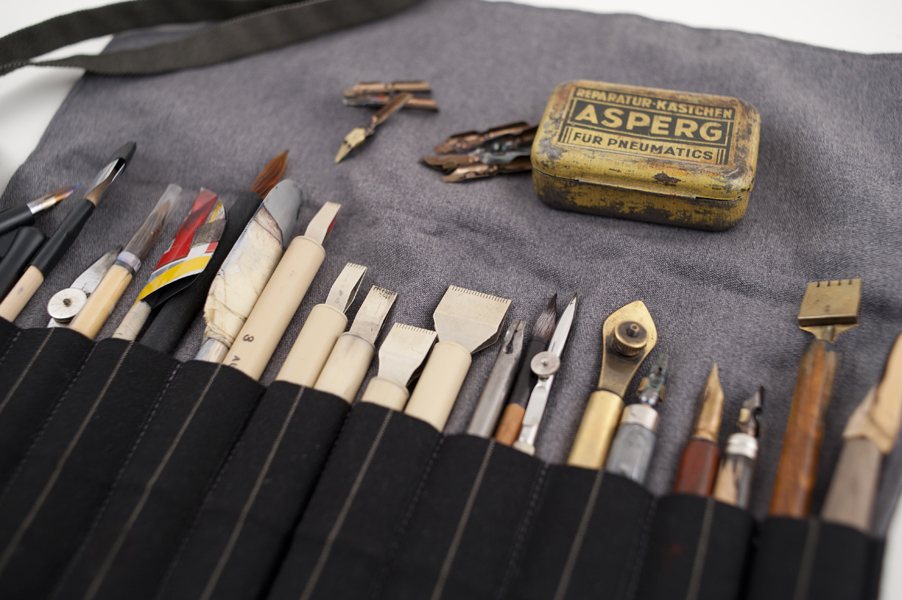
My approach was still more closely tied to graffiti writing and bombing the streets than to the discipline of the nib. Obviously, I felt a huge gap between the two, not least a generational gap. And yet both graffiti writers and calligraphers are driven by the same passion for letterforms, albeit in often diametrically opposed ways. In any case, I wanted to find a connection between these two worlds, and in order to do that I knew I’d have to delve deeply into classic calligraphic styles. So I began taking as many courses as I could, studied historic scripts, and diversified the instruments in my toolkit and the way I deployed them.

2_6-1

I was lucky to have had great teachers, each with their own irreplaceable peculiarities. Giovanni De Faccio is a veritable Renaissance man—a highly genuine, inexhaustible resource: I learned a lot from him about gothic lettering and its expressive potential; his rich, creative workshops were unforgettable, and had an almost timeless atmosphere. Anna Ronchi, one of Italy’s leading calligraphers, writes a chancery that exudes the rigor and incredible lightness with which she moves the pen to create elegant flourishes that are never exaggerated and never feel out of place; her specialty is a deep understanding of letters and traditions, as well as an in-depth, effective teaching method. She’s always on the front lines, defending her idea of calligraphy, and over the past few years has taken on the difficult task of bringing handwriting back into the schools through up-to-date programs. James Clough instilled in me a curiosity for letters found all around the city, letters that fully inhabit their own history; it’s his fault that I often find myself stopping in the middle of the street to photograph an old sign. He’s outrageously likable, and enthusiastically conducts memorable lessons while also dispensing constructive criticism with plainspoken honesty. Thanks to Lucio Passerini I learned to appreciate letterpress, blockprinting, and the value of the good time—both qualitative and quantitative (there’s a reason his studio is called Il Buon Tempo)—it takes to print a book.

The world of calligraphy I came to know consists of many exceptional people—including Ivana Tubaro, Francesco Ascoli, Anna Schettin, Ivano Ziggiotti, Marco Campedelli, and many others—who for years now have made their own contributions to calligraphy and typography with unwavering passion, hard work, and active participation. ACI was founded in 1991: this association played a significant role in bringing high-quality calligraphy—the kind of calligraphy passed on to us from Edward Johnston in the early twentieth century—to Italian graphic design and advertising, starting in Milan and spreading far and wide. Without ACI’s support I probably wouldn’t have had the opportunity to learn as much as I did, directly from the masters.

2_7-1 2_7-2

Its founders studied abroad—in England, Belgium, and America—before teaching in Italy. Upon returning they invited calligraphers like Hans Joachim Burgert, Thomas Ingmire, Hassan Massoudy, Klaus Peter Schäffel, Tom Kemp, Ewan Clayton, and others to come and teach as well. Their courses have always been organized by dedicated, self-financed volunteers.The associations that sprung up afterward worked similarly, and made a similarly great contribution to the field. They include the calligraphy groups in Turin led by Piero De Macchi and Massimo Polello, one in Rome run by Monica Dengo, and probably many others I’m not yet personally familiar with. Without their hard work no one in Italy would be talking about calligraphy today without having to start from scratch and explain what it is.

When I was first asked to teach, I wasn’t completely convinced I’d be able to pull it off. I spent a couple months preparing a course on Fraktur, and worried about how it would turn out. Contrary to my fears it went really well, and many other courses followed. The first thing I realized was that, in order to teach, you have to know how to pass on to students the sheer pleasure of practicing calligraphy; it takes major doses of generosity and energy, because at the end of a workshop you feel almost entirely drained. Over time you also develop your own teaching methods, and you have to make an effort not to repeat yourself, instead undertaking different lines of research so as to offer new subjects that reignite people’s interest—and, above all, your own interest.

2_8-1

I’ve always been struck at the diversity of participants in each course: they range from curious amateurs to dedicated graffiti writers, bibliophiles, women nostalgic for the inkwells and knuckle-rapping schoolmarms of their youth, tattoo artists who swear like sailors, and journalists tired of the keyboard who want to take up the pen again. I should also note that my courses are increasingly filled with fairly young people—a lot of students and budding graphic designers. Teaching is definitely a privileged opportunity for learning, too; it gives me the chance to travel and see places I otherwise might never have seen, as well as meet new people and, often, new friends.

Writing, like any other discipline, exists as long as it’s passed on; teaching means giving others the possibility of venturing down the same paths that allowed me to get my own start. It’s like coming full circle. Calligraphy is an art that comes from afar, and has deep roots—especially in Italy. You have to want to know its history and past in order to be able to follow its present (especially in the digital age), and hopefully its long future.

--------------------
This article was originally published in Take Your Pleasure Seriously (2012) by Luca Barcellona.

7-1 7-2

--------------------
image5

Luca Barcellona is born in 1978. He has his own studio in Milan, where he works as a freelance graphic designer and calligrapher. Letters are the main ingredient of his creations. He teaches calligraphy with the Associazione Calligrafica Italiana and holds workshops and lectures in several cities, as the last one in California and Australia. The means of his work is to make the manual skill of an ancient art as writing and the languages and instruments of the digital era coexist. In 2003 he founded with Rae Martini and Marco Klefisch the collective Rebel Ink, with which he gives life to a live exhibition of calligraphy, writing and illustration. In 2009 he has worked for the National Museum of Zurich, with calligraphist Klaus-Peter Schäffel, to realize the faithful reproduction of a big globe dated back to the 1569, using calligraphy with original materials (quill and natural inks). Among the brands that requested his lettering we can number Carhartt, Nike, Mondadori, Zoo York, Dolce & Gabbana, Sony BMG, Seat, Volvo, Universal, Eni, Mont Blanc, Wall Street Institute. Among his latest collective exhibitions: "Stuck on the City" in Prague, "Don't Forget To Write" at Carhartt Gallery (Germany). As well as taking part to several independent projects his works appeared in many publications. In 2010 he produced his own personal clothing brand "Luca Barcellona Gold Series". He recently published his first monographic book Take Your Pleasure Seriously by Lazy Dog Press, the publishing house which is a member himself. His study into lettering led him to experience from graffiti to classic calligraphy, up to big wallpainting, typography and letterpress printing.
http://www.lucabarcellona.com/

ルカ・バルチェローナ カリグラフィーワークショップ一般申込みスタート

7月28日(木) 22:00より、ルカ・バルチェローナ カリグラフィーワークショップの一般申込みをスタートします。

先日ご案内いたしました通り、「ブラックレター」「ルーリングペンバリエーション」の2つのワークショップについては、お申し込み多数のため、7月23日で受付を締めきらせていただきました。

ライブパフォーマンスについては、まだ定員まで充分に余裕がございます。
多くのみなさまからのお申込みをお待ちしております。

ライブパフォーマンスの申込みは定員一杯になりましたので締め切らせていただきました。

☛ お申し込みはこちら

■ライブパフォーマンス

lc3講師によるライブパフォーマンスと直接の交流をお楽しみください。

開催日時:2016年10月29日(土)
18:00~19:30
開場:17:30
会場:IID世田谷ものづくり学校 1階
  IID Gallery + ULTRA LUNCH
  http://setagaya-school.net/
定員:100名
参加料:2,000円(ワンドリンク付き)

★和英通訳の方のサポートが付きます。
※ライブパフォーマンスへの参加申込みは、ワークショップへの参加とは別の取扱いとなります。 ワークショップと合わせてお申込みの場合にも、参加料がかかります。ご注意ください。

■締切り日
2016年8月31日(水)  24:00まで
受付の状況は、J-LAFのウェブサイトにて随時アップデートいたします。
締切日以降に定員に空きがある場合には、その後の申込みも受付けます。空きの有無はJ-LAF ウェブサイトでお知らせします。

【ご報告】ルカ・バルチェローナ カリグラフィーワークショップ受付状況


7月21日22:00より優先受付を開始いたしましたルカ・バルチェローナ カリグラフィーワークショップの受付状況をご報告いたします。

2つのワークショップは、非常に多くの方からのお申込みをいただき、7月22日現在、既にキャンセル待ちの状況です。
ルーリングペン・バリエーション:キャンセル待ち2名
ブラックレター:キャンセル待ち12名
一般受付の開始前ではございますが、2つのワークショップにつきましては、この告知を以って、受付を終了させていただきます。
ご了承ください。よろしくお願いいたします。

ライブパフォーマンスの受付状況は、37名受付済み(7月22日現在)です。
定員は100名ですので、まだ余裕がございます。定員まで受付を継続して参ります。
お申込みをお待ちしております。
ライブパフォーマンスの申込みは定員一杯になりましたので締め切らせていただきました。

☛ お申し込みはこちら

よろしくお願いいたします。

ワークショップ担当:久賀

ルカ・バルチェローナ カリグラフィーワークショップ申込みスタート

ルカ・バルチェローナ カリグラフィーワークショップの申込みをスタートします。
賛助会員と一般の方の申込み開始日が異なります。詳細は下記をご覧下さい。
みなさまのご参加をお待ちしております。

☛ お申し込みはこちら

申込み方法
申込みフォームに必要事項をもれなく記載のうえ、送信してください。先着順にて受付けます。

※申込みフォームは、このお知らせの掲示と同時に入力ができるようになりますが、受付け開始時刻の22:00より前に送信されたものは無効になりますので、ご留意ください。
※直接メールをいただいてもお申込みはできません。必ず、リンクされた申込フォームでお申し込みください。

【重要注意事項】
ルカ・バルチェローナ カリグラフィーワークショップでは、ワークショップを2クラスとライブパフォーマンスを実施いたしますが、今回の申込み受付では重要な注意事項がありますので、ご留意ください。
ワークショップの申込みでは、どちらか1つのワークショップのみにお申込みください。両方へお申込みがあった場合、申込みは両方について無効となります。
ワークショップの日程・内容のご確認はこちらから。
☛ WS ① - ルーリングペン バリエーション
☛ WS ② - ブラックレター (Blackletters)
ライブパフォーマンスは、ワークショップと組み合わせてお申込みいただけます。


※申込みフォームより送信後、自動返信メールが届きます。
1時間経過しても自動返信メールが届かない場合は、お手数ですが、workshop◎j-laf.orgまでご連絡をお願いいたします。(◎ を @ に変換してください。)
ご連絡いただく際は、送信データを照合するため下記1〜3を明記してください。
1:送信日時 2:お名前 3:メールアドレス

※スマートフォンから申込みをされる場合、画面操作に問題が無ければ申込みは可能ですが、ご案内のメールには添付ファイルが含まれる場合がありますので、連絡先のメールアドレスは、添付ファイルが受け取れるアドレスをご指定ください。

■申込み開始日
優先受付:2016年7月21日(木)22:00~
*****賛助会員(フレンズメンバー/サポーティングメンバー)のみ対象

※優先受付でのお申込みには、いかの条件が必須です。ご確認のうえ、お申込みください。
●6月30日時点で賛助会員であることが確認できる方に限定
●8月1日の会員資格更新手続きにおいて、年会費振込期日までに会費の振込みが確認できなかった場合、参加資格を無効とし、キャンセル待ちの方へ参加資格が移りますので、ご留意ください。
●優先申込みの際には会員番号が必要となります。
-会員登録の際にお送りしているメールに番号が記載してあります。事前にご確認ください。
-会員番号の入力がない場合には、「一般」受付の対象となり優先受付から外れます。
-会員番号がわからない場合には、早めにmembership◎j-laf.orgまでお問い合わせください。(◎を @ に変換してください。)

一般の方:2016年7月28日(木)22:00~

■締切り日
2016年8月31日(水)  24:00まで
受付の状況は、J-LAFのウェブサイトにて随時アップデートいたします。
締切日以降に定員に空きがある場合には、その後の申込みも受付けます。空きの有無はJ-LAF ウェブサイトでお知らせします。

“Take Your Pleasure Seriously” by Luca Barcellona -1-

「Take Your Pleasure Seriously」The way of handwriting

letters
from the past


I can’t recall the exact moment in which writing went from being a passion to my line of work, but I do know that it wasn’t premeditated. I began working when I was seventeen, and still a student. I’ve had a lot of different jobs in the past, including some very humble ones. My main interest at the time was graffiti, drawing letters all day just like now, even if I did it in a completely instinctive manner. Like many of my peers, I spent hours sketching out what would later see the light—paradoxically, at night—on subway and train cars or in some other corner of the city.

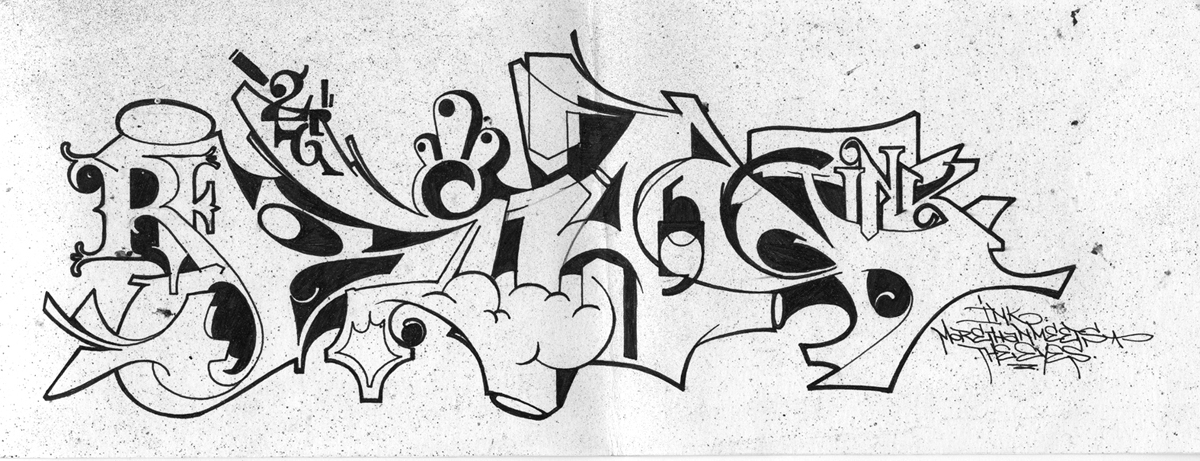
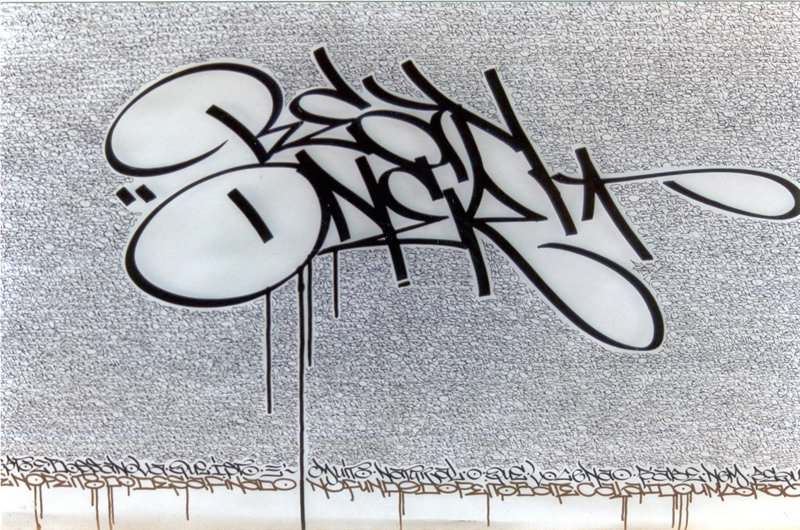
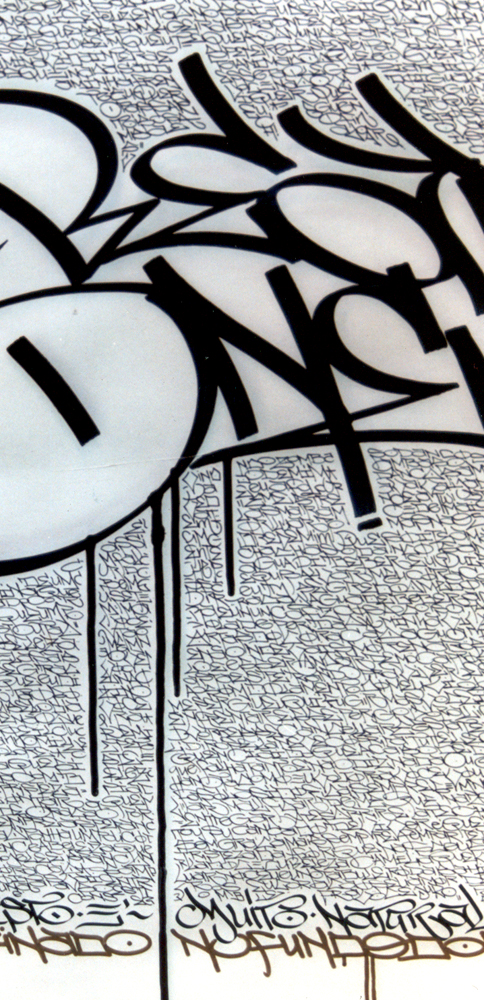
I got by in school, but my strongest memory is of pen and paper, and how intent I was on improving my tag so I could show it to other graffiti writers. I recall choosing my first tag in 1994, based on the letters I liked, without knowing what it meant; first it was “Been,” which later became “Bean” to avoid dealing with the double “e.” There were often no books in my backpack, which I filled instead with cans of spray paint cracked open as soon as school was out, coating diesel trains parked near the station in my hometown on the outskirts of Milan: during class I would prepare the outline, and by 2:30 that afternoon I was out there painting it on the train cars.

1-1

1-2

Ditto each evening: I always had a marker in my pocket and left marks that to most people looked like little more than small scrawls, while for us writers they grew increasingly complex, and increasingly important, because that was our ID in the subculture we ourselves had created, a micro-society most people ignored. If I were asked to define it now, I could only awkwardly say that we were a bunch of amicable, maladjusted kids who were trying to escape mediocrity by pursuing a somewhat risky pastime. I think this “parallel education” left such a deep mark on me that I decided not to shed it as I grew—it was my real schooling, and I knew I should make something of it.

I found the graphic design that teachers talked about relatively interesting. I remember the transition from analog to digital being a bit traumatic: when I began design school I was fascinated by Pantone, transfer sheets, Rapidographs, and works drawn on Schoeller paper; when I finished, in 1997, all that had been replaced by computers. Had I told anyone I wanted to be a calligrapher, they would certainly have thought I was mad. “There’s no market for that,” they’d have said. All anyone talked about was websites, servers, and Flash, while I was running around with a large black leather-bound sketchbook full of drawings, photos, and sketches of graffiti and a few works of primordial calligraphy. My experiences as a graphic designer came later, and they weren’t very creative. For the most part I did page layouts for design and architecture magazines. A few ad agencies gave me job interviews. I remember an art director who, looking at some of my images, said, “It looks tough. Interesting…” He made a few color photocopies and never called me back.

2-1

2-2

My job search grew more discouraging by the day: I had learned some graphic design software, but I didn’t want using it to become my full-time job. I decided to give it up, because the repulsion I felt toward the gadgets that had completely wiped out all manual work in the field was too strong for me to pretend nothing was wrong and to try adapting to the change. In 2003 I found work at a music store that was part of a large chain. I stayed there for four years, and after work I began to draw and practice with a nib pen, making works on canvas and experimenting with lettering, mostly in a self-taught way. Then I began receiving strange work requests, everything from commissions spray painting stores to customizing booths, products, and model cars for specialized trade fairs. I also began lettering invitations for some stylists with whom a few of my other calligrapher friends had been working for years; it was a real privilege, they paid me to just write all day, and three or four days’ work paid more than what I earned in a month at the store. It was also an exercise that improved my writing, something I probably wouldn’t have done otherwise. Writing names and addresses for eight hours straight can be a kind of “slavery,” as James Clough calls it, but it can be quite useful. I often gave up my vacation days to do that work and other jobs, and when I had no days left I made up absurd excuses to get time off. For a while, some of my close relatives were on the brink of death about once a month (my apologies, everyone!).

3-1

3-2

I hadn’t yet begun posting works on the web, but a few photos ran in some magazines and I was busy with performances by Rebel Ink, a collective I was part of alongside Rae Martini, Marco Klefisch, and Francesca Gandolfi. We’d begun touring many Italian cities, and later toured abroad as well; the Rebel Ink site was our long-term homepage, but a lot of people also came out to see us in person, and word began to spread. We began performing in 2003 and our last events took place in Prague in 2009, after which we all took different paths. We were well aware of the fact that it wasn’t just some random experience; it had given us real meaning without tying us down to the world of street art, a niche we had never really identified with, and had distanced ourselves from at the very outset. We knew our work with graffiti would come to a turning point, and we were determined to decide where it would go from there.

The idea that someone I didn’t even know might wear something I’d drawn piqued my curiosity. I designed my first “official” T-shirt in 2006 for Gold, a company I still work with, and with whom in 2010 I co-produced an entire line. Then came the graphics for Iuter, a streetwear brand founded by friends that was starting to take off. A lot of the connections that brought these commissions came from people I’d met through hip-hop, a scene I had been part of for several years, and which remains a integral part of my roots.

Meanwhile, the demand for my work kept growing, to the point where I transitioned to working half days in the store, and then one day I up and quit, just like that. I left my safety net so I could continue drawing letters, without knowing exactly what kind of work I’d chosen to do. About a month later I designed my first headline for an advertising campaign. I couldn’t believe it, and I strolled out of the agency light on my feet, singing to myself, almost leaping for joy like a scene in a film. I was definitely afraid of not making it, but then I understood that, even if it went badly, I could always go back and find work somewhere else. In the meantime I intensified my calligraphy studies and began taking evening courses in computer graphics, type design, and printmaking, so that I’d have as many visual languages as possible to apply to my work. I knew I had to do that in order to gain a deeper understanding of the subject, although I also have to admit that it wasn’t easy to continue drawing letters all evening after spending the entire day doing it. I bought and read books on typography with an almost maniacal diligence. Actually, it was outright maniacal. But that was a bit of a passing phase, too…

4-1

4-2

4-3

the calligrapher’s
profession today

Up until about some years ago I couldn’t have imagined refusing certain gigs and devoting my time only to the ones that interested me—I considered that a luxury. But soon thereafter I found myself in that very position, having to make hard choices.
First of all, I had to deal with the ethical issues: when your passion becomes your profession, you’re faced with the choice of either working or not working with clients that might not share your same values. Soon, however, you realize that in such cases ethics are really just a matter of personal preference, something you have to sort out for yourself. “Purity” and the need for others’ approval are probably relics of graffiti writing.

I chose to try my hand at commercial work very early on. I thought I’d be able to do it just like so many of my idols had done—Herb Lubalin, Saul Bass, and Milton Glaser—without it detracting at all from the splendor of the final creations. The thing that fascinates me about those designers and many other letterers is the way their logos and brands have become part of popular culture—the well-designed lettering found on everyday products, on supermarket shelves and everywhere else. I walk through stores and I encounter Massimo Vignelli on the bottles of Feudi di San Gregorio wine, Saul Bass on boxes of Kleenex, and even Salvador Dalí in the Chupa Chups lollipop logo.

Up to now I’ve found a happy medium, alternating purely commercial jobs with more personal ones, or ones for causes I openly support. Such manual work definitely takes time, especially since I’ve decided to do it all myself and in keeping with traditional methods. If I’m asked to work on something, I absolutely cannot delegate it to anyone else, so I always try to do everything from the first pencil sketches to the scans and digitization. Each step left to others means giving up a bit of control, and in my case, unfortunately, that also means compromising on quality. I’m fairly resigned to dividing my time between drafting table and computer, trying to answer e-mails on one without letting the ink dry on the other. It should also be said that not every time of day is well-suited to doing calligraphy: your mood, or even just a bit too much espresso, can compromise the quality of your writing, and I’ve found it’s almost always best to leave pen work to the evening, after the phone has stopped ringing.

5-1

5-2

VINILEdef.indd

 
The starting point of a work is fundamental; a good brief can make all the difference. If they tell you “go ahead, we trust your judgment, do something with your own style,” or if their references are confused or conflicting, it means the client doesn’t have clear thoughts and it will be more work than expected. It’s almost always better to deal with small- to medium-sized clients. The bigger the commission, the more people get involved, and then things can get a bit schizophrenic: you might have worked several days on a project that suddenly gets shelved for no apparent reason; you might be asked to make changes or meet insane deadlines that don’t even give you time to see whether your design might be improved upon—either way, you have to pull it off. Clients rarely realize how much time it really takes to work by hand, so you have to be pretty fast in order to meet their deadlines, which are often insane.

I addressed the absurdity of some bad habits that usually increase the demand for designer’s work (and not only the work) in a series of embittered, ironic t-shirts produced by Gold called the Designer Series. I featured phrases like: “Unfortunately, we don’t have a budget for this project,” “Unfortunately, our timeline is really tight,” and “This is a non-profit project, but we guarantee maximum visibility,” accompanied by annoying insects, a mosquito, a fly, a maggot—all phrases we regrettably hear a lot when being asked to work. The shirts were super popular and, paradoxically, one ad agency even asked me if they could print some with their logos as Christmas gifts for their employees. Apparently they were amused by the very phrases they themselves often uttered. But I don’t find it amusing in the least that it’s considered normal for the hard work of graphic designers and photographers to go unpaid, or that they’re constantly bid down and expected to give outrageous discounts, relegating quality to second place. I think the worst kind of commission is when you’re dealing with accounts that reason solely according to market logic.

In certain cases talking about formal qualities and color tones becomes pointless. Especially in advertising, you get the feeling you’re being “bought,” like you’re the mere executor of questionable ideas that you cannot call into question; it can be very frustrating and sometimes alienating, as if you’re just a cog in the machine, tightening the same screw all day on the assembly line. You can design a logotype or a headline for an ad campaign that then becomes the company’s property: you might see it distorted or modified, its letters cut out to assemble other words, and never once are you asked about any of it; naturally, those who see the ad plastered up all around town or in the newspapers have no idea of the back story, they just think you did a mediocre, sub-standard job.

6-1

Fortunately, I’ve also met some great art directors, ones with a real eye, culture, and sensibility. Some film directors have asked me to do the titles and credits for their movies, spending hours explaining to me their vision and exactly what they had in mind; that proved their total passion for the project, and when that happens and you reflect on the outcome, you can feel satisfied and even a bit amazed. I really believe in the concept of gratification: using your own capabilities to complete something that makes you feel useful, alive, active, and fully realized. That feeling is amplified through collaborative teamwork, those rare instances when a group works together, each with his/her own role, casting aside ego and vanity in favor of doing the best work possible. Such occasions include: witnessing the premiere of shows like “C’era una volta a Roma” (Once Upon A Time in Rome), after months of work that culminated in a couple hours of music and high suspense, remembering—as the images cross the enormous screen before a vast audience—every single letter drawn by brush at the drafting table on boiling July afternoons; seeing the reproduction of the Saint Gallen Globe finished after years of work in many craftspeople’s hands, each bringing their own experience to the object; the titles projected behind the orchestra at the premiere of Cesare Picco’s concert “La storia di Genji,” (The Tale of Genji) at the Teatro Nuovo in Verona; the opening titles of “Io sono l’amore” (I Am Love) at the cinema. These projects and a few others gave me that indescribable sensation I continually seek, the feeling that pushes me forward on my quest through the fascinating world of letterforms.

In addition to the work, memories of the voyage—the people and places you’ve encountered—stay with you. I don’t, therefore, view of all these things as mere aspects of making a living; rather, they are a fundamental part of life itself.

--------------------

This article was originally published in Take Your Pleasure Seriously (2012) by Luca Barcellona.

7-1

7-2

--------------------
image5

Luca Barcellona is born in 1978. He has his own studio in Milan, where he works as a freelance graphic designer and calligrapher. Letters are the main ingredient of his creations. He teaches calligraphy with the Associazione Calligrafica Italiana and holds workshops and lectures in several cities, as the last one in California and Australia. The means of his work is to make the manual skill of an ancient art as writing and the languages and instruments of the digital era coexist. In 2003 he founded with Rae Martini and Marco Klefisch the collective Rebel Ink, with which he gives life to a live exhibition of calligraphy, writing and illustration. In 2009 he has worked for the National Museum of Zurich, with calligraphist Klaus-Peter Schäffel, to realize the faithful reproduction of a big globe dated back to the 1569, using calligraphy with original materials (quill and natural inks). Among the brands that requested his lettering we can number Carhartt, Nike, Mondadori, Zoo York, Dolce & Gabbana, Sony BMG, Seat, Volvo, Universal, Eni, Mont Blanc, Wall Street Institute. Among his latest collective exhibitions: "Stuck on the City" in Prague, "Don't Forget To Write" at Carhartt Gallery (Germany). As well as taking part to several independent projects his works appeared in many publications. In 2010 he produced his own personal clothing brand "Luca Barcellona Gold Series". He recently published his first monographic book Take Your Pleasure Seriously by Lazy Dog Press, the publishing house which is a member himself. His study into lettering led him to experience from graffiti to classic calligraphy, up to big wallpainting, typography and letterpress printing.
http://www.lucabarcellona.com/

ルカ・バルチェローナ「Take Your Pleasure Seriously」 1回目(全3回)

「Take Your Pleasure Seriously」手書き文字を究める道

私と文字
過去のこと

私は、書くことが「大好きなこと」から「仕事」に移った正確な時期を思いだせませんが、それがあらかじめ計画していたことではないことは確かです。
私は、まだ学生だった17歳の頃に働き始めました。過去にはありとあらゆる仕事をし、その中には取るに足らないものもいくつかありました。その頃、私はグラフィティに最も興味があり、全くの直感的なやり方でしたが、今と同じように一日中、文字を書いていました。多くの友達がするように、電車の車体や街角に、後に日の目を見ることになるものを(人の目に触れるのが夜という意味では、逆説的ですが)描いていました。

学校では何とかやっていましたが、一番強く記憶に残っているのはペンと紙のことであり、タグ(グラフティライターがマーカーやスプレーで描くロゴのようなサイン)が上達して他のグラフィティライターに見せることにどんなに熱心になっていたかということです。私は1994年に最初のタグを、その意味も知らずに自分の好みを基準に選んだのを思いだします。それは最初Beenだったのですが、後で、連続したeを避けるためにBean にしました。バックパックには、本の代わりにスプレーペイントの缶を詰め込んでいることもよくあり、学校が終わるとすぐに蓋を開けて、ミラノの私の故郷の駅近くに停車しているディーゼル車に塗っていました。授業中に輪郭を考え、午後2時半までにはそこに行って車両に描いていたのです。

1-1

1-2

毎日同じことの繰り返しでした。ポケットにはいつもマーカーペンを持っていて、マークを描き残していました。そのマークは、人にはただの殴り書にしか見えないけれど、私たちにはますます複雑で大切なものになっていきました。なぜならそれは私たち自身が作り上げたサブカルチャー、つまり、たいていの人は無視するミクロ社会における身分証明書だったからです。今、それを定義づけるとしたら、私たちはフレンドリーだけれど環境に適応できない子供達だったとしか言いようがないのですが、危険な気晴らしを求めることで月並みさから逃れようとしていたのです。思うに、この「学校と並行した勉強の場」は、私が成長してもなくさないでおこうと心に強く思う大きなものを残してくれました。それは私にとっての本当の学校であり、きっとそれを役立てていくはずだと分かっていました。

私は、教師達が語るグラフィックデザインは比較的おもしろいと思いました。アナログからデジタルへの移行はやや衝撃的だったことを覚えています。デザイン学校に通い始めた頃、パントン(色見本帳の1つ) や転写紙、ラピッドグラフ(製図ペンの1つ)、 そしてデザイン用紙に描かれた作品に魅了されました。1997年に学校を修了した頃には、それらすべてがコンピューターに取って代わられてしまいました。その頃もし私が誰かにカリグラファーになりたいと言っていたら、きっと頭がおかしいと思われたでしょう。「仕事なんてないよ。」と言われたでしょう。彼らが話題にしていたのは、ウェブサイトやサーバー、フラッシュのことばかりで、一方私は、デッサンや写真、グラフィティのスケッチ、それに基礎的なカリグラフィー作品の入った大きな黒い革表紙のスケッチブックを持ち歩いていました。私がグラフィックデザインを経験するのは後になってからですが、あまりクリエイティブな経験ではありませんでした。私はだいたいデザインや建築雑誌のページレイアウトをしていました。いくつかの広告代理店で面接も受けました。あるアートディレクターが私の作品を見て、「厳しそうだ、おもしろいけど・・・」と言ったのを覚えています。彼は何枚かカラーコピーを取りましたが、その後二度と連絡してきませんでした。

2-1

2-2

私は日に日に仕事探しにやる気をなくしていきました。グラフィックデザインソフトを学んだりもしましたが、それを使ってフルタイムの仕事にしたくはなかったのです。私はグラフィックデザインをあきらめました。それは、その分野でのあらゆる手仕事を一掃してしまった電子機器類に対する嫌悪感が強すぎて、これでいいのだと自分をごまかし、変化を取り入れることができなかったからです。2003年には大きなチェーン傘下の楽器店で仕事を見つけ、4年間働きました。仕事が終わると、ドローイングやペンを使った練習をして、ほぼ独学でキャンバスに作品を作ったりレタリングの実験をしたりしました。やがて、委託のスプレーペイント店や、専門の見本市用のブースや製品、モデルカーなどを特別注文で製作するといった、一風変わった仕事の依頼が来るようになりました。また、私の友人カリグラファーが何年も一緒に仕事をしていたスタイリスト達の招待状書きも始めました。それは本当にありがたいことに、3、4日間、一日中書くだけで、店で1ヶ月働くより多く稼げました。それはまた、私の文字が上達するのに他の方法では出来ないような練習にもなりました。8時間ぶっ通しで宛名や住所を書くというのは、ジェイムズ・クラウが言うところの「奴隷」のようなものですが、とても役に立ちます。私はしばしば休暇を返上してそういう仕事をし、時間が足りなくなるといい加減な口実を作って店の仕事を休みました。一時期、私の親戚が何人か月に一度くらい死にかけたのです。(皆さん、ごめんなさい!)

3-1

3-2

その頃、私はまだウェブ上に作品を上げ始めてはいませんでしたが、雑誌には写真が掲載されるようになり、ラエ・マルティー二や マルコ・クレフィッシュ、 フランチェスカ・ガンドルフィと一緒に、レベルインクというグループの一員として行うパーフォーマンスで忙しくなりました。多くのイタリアの都市を回り始め、後には海外にも出かけました。長年、レベルインクのサイトが私たちのホームページでしたが、多くの人が私たち自身にも会いに来るようになり、うわさが広がり始めました。2003年に始めたパーフォーマンスは2009年のプラハでのイベントが最後で、その後私たちは別々の道を歩むことになりました。それは単なる行き当たりばったりの経験ではないということを私たちはよく分かっていました。私たちのしていたことは、ストリートアートという世界に私たちを縛り付けずに本質的な意味を与えてくれました。それは、ストリートアートというニッチな世界とは全く違いましたし、私たち自身、最初からその世界とは距離を置いていました。グラフィティの活動はターニングポイントが訪れるであろうことに私たちは気づいており、そこから始めるのだと強く心に決めていました。

私は、私の知らない人が私の描いたものを着るかもしれないという考えに興味をそそられました。2006年にゴールド社のために最初の「公式」Tシャツをデザインしました。その会社とは今でも仕事をしていますし、2010年にはすべての製品を共同制作しました。次は、友人が立ち上げて人気が出だしたストリートウェアのブランド、イウターのためのグラフィク・デザインでした。こういう依頼の多くは、ヒップホップを通して出会った人達からもたらされたものでした。ヒップホップとは数年間関わり、今でも私のルーツのなくてはならない部分です。

そうしている間にも、仕事の依頼は増え続けていき、店で働くのは半日ということに変えました。そして、ある日突然それも辞めてしまいました。自分がどんな仕事を選んだのかもはっきりとは知らずに、文字のドローイングを続けられるようにとセイフティーネットを捨てたのです。1ヶ月ほどたって、ある広告キャンペーンの見出しを初めてデザインしました。そのことが信じられなくて、足取りも軽く歌を口ずさみながら、映画のワンシーンでもあるかのように嬉しくて飛び跳ねながら代理店を後にしました。うまくいかないのではないかととても怖かったのですが、その時、たとえだめでもいつも元に戻れば、どこか別のところで仕事が見つかると分かったのです。その間、私はカリグラフィーの勉強を増やし、仕事に使える視覚言語を出来るだけたくさん持てるように、コンピューターグラフィックスやタイポグラフィー、版画の夜間コースを受講し始めました。自分の仕事をよりよく理解するためにはそれが必要だとは分かっていましたが、1日中仕事で文字を書いた後に、毎晩、文字のドローイングを続けるのは簡単なことではありませんでした。私は、タイポグラフィーの本を買い、狂ったように真剣に読みました。実際、狂気じみていました。まあ、それは一時的なことでもあったのですが。

4-1

4-2

4-3

カリグラファー
現在の仕事

数年前までは、ある種の仕事は断って自分の興味のあるものだけに時間を使うということは想像できませんでした。それは贅沢だと思っていたのです。しかし間もなく、自分がまさにそういう立場になって、難しい選択をしなければならなくなりました。まず最初に、倫理的な問題に対処しなければなりませんでした。「大好きなこと」が「職業」になると、自分と同じ価値観を持っていない顧客と一緒に仕事をするかしないかという選択に直面します。しかしすぐに、そういう場合の倫理観というのは個人的な嗜好にすぎず、自分で取捨選択すべきものだと気づくのです。「純粋さ」とか他人の賛同を要求するだとかということは、おそらくグラフィティ・ライティングをしていた時の名残でしょう。

私は、かなり早い段階で商業活動に挑戦することを選択しました。ハーブ・ルバーリンや ソール・バス、ミルトン・グレイザーといった私が崇拝する人達のように、最終的な作品の素晴らしさをそこなわずにそれが出来ると思ったのです。こうしたデザイナーやその他の多くの文字をデザインする人達に私が魅了されたのは、彼らの作るロゴやブランドが大衆文化の一部になっていく様子です。よくデザインされた文字は、日々のスーパーマーケットの棚などいたるところで目にされるようになりました。店を歩いていると、マッシモ・ヴィネッリのデザインによるフェウディ・ディ・サン・グレゴリオのワインボトル、 ソール・バスによるクリネックスの箱 、そして、サルバドール・ダリによるチュパチャップス棒付きキャンディーのロゴに出くわすことさえあります。

現在に至るまでに、純粋に商業的な仕事と、もっと個人的な、あるいは私が堂々と支持する主張のための仕事を交代に出来る幸せな手段を見つけました。このような手仕事は、すべて自分で、伝統的な方法に沿ってやるのでとても時間がかかります。私は仕事を依頼されたら、決して他人に委託することは出来ないので、最初の鉛筆スケッチからスキャン、デジタル処理まですべて自分でやろうとします。それぞれのステップを人に任せるということは、コントロールを失い、私の場合、残念ながら品質での妥協を意味することにもなるのです。しかたがないので私は、自分の時間を、ドラフティング用の机とコンピューターの間で分割し、一方でメールに返事をしながら、他方でパレットやインク壺のインクを乾かさないようにしています。また、1日のうちいつでもカリグラフィーをするのに適しているわけではないということは言っておくべきでしょう。気分とか、少しエスプレッソが多すぎただけでも書き方の質に妥協が生まれますし、ペンを取るのは夜、電話が鳴らなくなった後がほぼベストだということがわかりました。

5-1

5-2

VINILEdef.indd

1つの仕事の出発点はとても大事です。良い指示があれば大きな違いを生みます。「さあ取り掛かって。あなたの判断を信じています。ご自分のスタイルでやってください。」と言ってくれればよいのですが。そうではなく、指示が混乱していたり矛盾していたりすると、それは依頼者が明確な考えを持っておらず、予想以上に仕事が増えることを意味するのです。必ずと言っていいほど、中小規模の依頼者と仕事をする方がうまくいきます。依頼が大きくなればそれだけ関わる人も増え、物事の一貫性がなくなりかねません。ある企画で数日間働いた後、突然明らかな理由もなくそれが棚上げにされることもありますし、自分のデザインが改善されるかどうか考える暇さえないような変更や、無茶な締め切りを求められることもあるでしょう。どちらにしても、うまくやるしかないのですが。手仕事に、実際どれほど時間がかかるのかを理解している依頼者はほとんどいませんから、締め切りを守るためには大急ぎでやらなければならず、それは正気の沙汰とは思えません。

ゴールド社がプロデュースした「デザイナーシリーズ」と呼ばれる苦々しくて皮肉めいたTシャツシリーズでは、私は、デザイナーの仕事(仕事だけではないのですが)に対する要求を増加させる悪い習慣の不条理さに取り組みました。こんなフレーズを取り上げたことがありました。「残念ながら、私たちにはこの企画のための予算がない」とか、「残念ながら、私たちのスケジュールは本当にきつい」とか、「これは非営利プロジェクトですが、最大限の露出を保証します」というフレーズに、蚊、ハエ、ウジ虫といったうるさい虫を添えたのです。残念なことに、これらは皆、仕事を依頼される時によく耳にするフレーズです。このTシャツは大人気で、逆に、ある広告代理店が、従業員用のクリスマスギフトとして自社のロゴと一緒にプリント出来ないかと尋ねてきました。どうやら彼らは、自分たちがまさに口にしているフレーズをおもしろがっていたのです。しかし私は、グラフィックデザイナーや写真家の重労働に対して、無給で働かせたり、質を二の次にしてまで、常に入札価格を下げたり、法外な値下げを求めたりするようなことが当たり前だという考え方は到底おもしろくありません。最悪の依頼は、市場論理だけで判断する取り引きだと思います。

質や色調について話すのが無意味なケースがあります。特に広告業界では、デザイナーは「買われている」といった感じで、疑問をはさむことも出来ない、おかしなアイデアの遂行者に過ぎないのです。それはとてもフラストレーションがたまり、時に疎外感があります。自分は単なる機械の歯車で、組み立てラインで1日中同じネジを締めているようなものです。なにかの広告キャンペーンのロゴやヘッドラインをデザインしても、それは後にその会社の所有物となります。形が歪められたり、修正されたり、文字がカットされて他の単語とつなげられたりしているのを目にしても、それについて何一つ尋ねられたりはしません。その広告を町中や新聞紙上で見た人は、そういういきさつを知らずに、平凡で標準以下の仕事だなと思うのです。

6-1

幸いなことに、確かな目と見識、それに感性を持ったすばらしいアートディレクターにも出会いました。幾人かの映画監督には映画のタイトルとクレジット(制作者一覧)を依頼されましたが、彼らは何時間もかけて、自分たちのビジョンや正確な思いを説明してくれました。それは、彼らの企画に対する情熱をはっきりと示していましたし、それを結果に反映すれば、こちらも満足感を得られ、多少の驚きさえあるのです。私は本当に、満足感というものの存在を信じています。それは、自分が役立っている、生きている、前向きであると感じ、自分のアイデアが実現するような何かを完成させるために自分自身の能力を使うということです。この感覚は協力的なチームワークを通して増幅し、こういうグループで仕事をするようなまれな事例では、それぞれが自分の役割を持ち、最高の仕事ができるように、エゴや虚栄心を脇にやるのです。例えば次のような場合です。何ヶ月もかけた仕事が2,3時間の音楽と高度なサスペンスとなって最高潮に達する『C'era una volta a Roma』(ワンス・アポン・ア・タイム・イン・ローマ)のようなショーの初日を迎えた時。大観衆を前にした巨大スクリーンを映像が横切っていく間、うだるような暑さの7月の午後、ドラフト用の机で筆で描いた1文字1文字を思い出した時。多くの職人が目的のためにそれぞれ自分の経験を持ち寄って何年もかけて完成したザンクトガレンの地球儀(Saint Gallen Globe)の複製を見た時。ヴェローナの ヌオーヴォ劇場でのチェーザレ・ピッコによる コンサート『La storia di Genji』(源氏物語)の初演の場で、オーケストラの背後にタイトルが投影された時。映画館で『Io sono l'amore』(ミラノ、愛に生きる)のオープニングの字幕を見た時。これらのプロジェクトによって私は、自分が常に追い求めている、言葉では言い表せない感覚、つまり、レターフォーム(文字の形)のすばらしい世界を通して私が探し求めているものを後押ししてくれる感覚を得ることができたのです。

仕事に加えて、今までに出会った人々や場所といった、旅の記憶も残ります。ですから、私は、これらすべてを単なる生活手段ととらえてはいません。むしろ、人生そのものの根本的な部分なのです。

--------------------
この記事はルカ・バルチェローナの著書『Take Your Pleasure Seriously』(2012)に 掲載されたものです。
7-1

7-2

--------------------
image5

Luca Barcellona ルカ・バルチェローナ

1978年生まれ。イタリアのミラノにスタジオを持つグラフィックデザイナー、カリグラファー。文字は彼の創作活動において最も重要な要素である。 イタリアカリグラフィー協会にてカリグラフィーの教鞭をとるとともに、アメリカ、オーストラリア、ブラジル、ドイツなど世界各地でワークショップの講師を務める。その活動が示す通り、文字と言葉に関わる伝統的芸術の手書き技術をデジタル時代の表現手段と共存させている。2003年に、ラエ・マルティー二、マルコ・クレフィッシュと、カリグラフィーを含む手書き文字とイラストのライブパフォーマンス集団レベルインクを立ち上げる。2009年には、スイスのカリグラファー、クラウス・ペーター・シェッフェルと共に、スイス国立博物館において、1569年に作られた大きな地球儀を、当時と同じ道具(羽ペン・自然素材で作られたインク)を使った カリグラフィーで、原作に忠実に複製する作業の実現に寄与した。文字のデザイン依頼を受けたブランドとして、Carhartt、Nike、 Mondadori、Zoo York、Dolce & Gabbana、Sony BMG、Seat、Volvo、Universal、Eni、Mont Blanc、Wall Street Instituteなどが挙げられる。また、最近参加した展示には、プラハで開催された『Stuck on the City』、ドイツのCarhartt Galleryで開催された『Don't Forget To Write』がある。多くの個別のプロジェクトへの参加と同様に、彼の作品は多くの出版物に登場している。自身の服飾ブランドLuca Barcellona Gold Seriesを2010年に立ち上げ、最近では初の単行本である『Take Your Pleasure Seriously』を彼自身がメンバーを務めるLazy Dog Press社より刊行している。彼の文字デザインに対する取り組みは、グラフィティの経験から伝統的なカリグラフィーへと導かれ、更に大きな壁に描く ウォールペイント、タイポグラフィーそして活版印刷まで広がっている。
ウェブサイトhttp://www.lucabarcellona.com/

翻訳:深尾全代  
   清水裕子
ルカ・バルチェローナ「カリグラフィーWS」2016 詳細・申込み要項のご案内

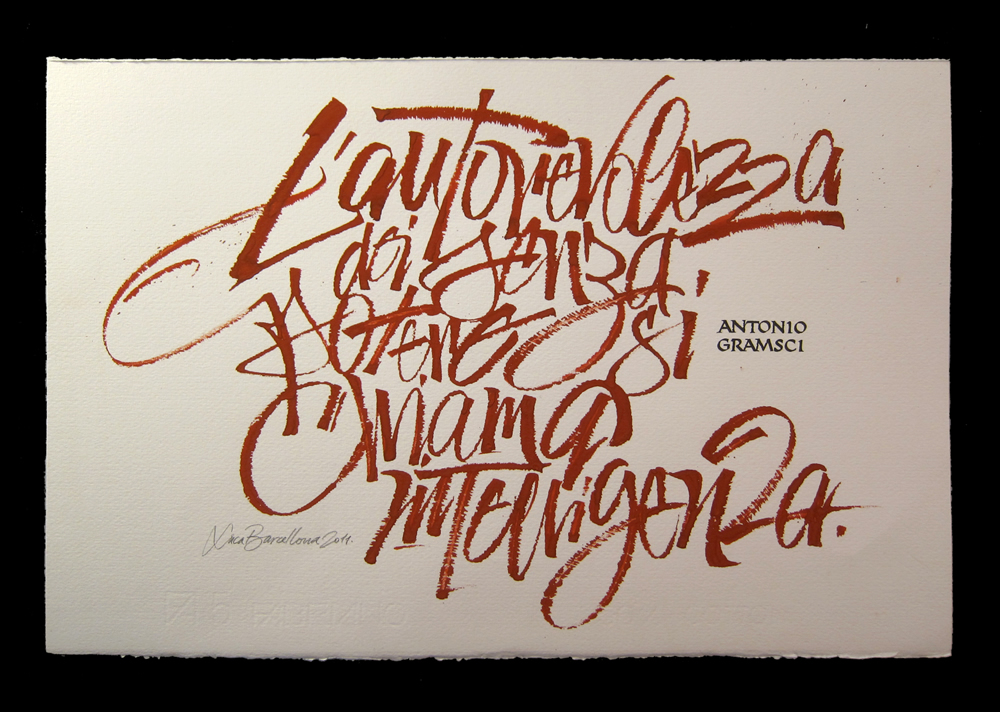
Gramsci_quoteルカ・バルチェローナ カリグラフィーワークショップの詳細及び申込み方法が決定いたしましたので、ご案内いたします。
賛助会員と一般の方の申込み開始日が異なります。詳細は下記をご覧下さい。
みなさまのご参加をお待ちしております。

【申込み方法】

申込み開始日に「NEWS」ページに申込みフォームが掲載されます。
必要事項を漏れなく記載の上、送信してください。先着順にて受付けます。

【重要事項】
ルカ・バルチェローナ カリグラフィーワークショップでは、ワークショップを2クラスとライブパフォーマンスを実施いたしますが、今回の申込み受付では重要な注意事項がありますので、ご留意ください。
ワークショップの申込みでは、どちらか1つのワークショップのみにお申込みください。両方へお申込みがあった場合、申込みは両方について無効となります。
ライブパフォーマンスは、ワークショップと組み合わせてお申込みいただけます。

※申込みフォームの準備が整いましたら、改めてJ-LAFウェブサイトにて告知いたします。フォームへのリンクについては、次回告知までお待ちください。

※申込みフォームは、優先受付け開始日の20:00を目途に入力ができるようになりますが、受付け開始時刻の22:00より前に送信されたものは無効になりますので、ご留意ください。

※申込みフォームより送信後、自動返信メールが届きます。
1時間経過しても自動返信メールが届かない場合は、お手数ですが、workshop◎j-laf.orgまでご連絡をお願いいたします。(◎ を @ に変換してください。)
ご連絡いただく際は、送信データとの照合のため下記1〜3を明記してください。
1:送信日時 2:お名前 3:メールアドレス

※直接メールをご送付いただいてもお申込みはできません。ご注意ください。

※スマートフォンから申込みをされる場合、画面操作に問題が無ければ申込みは可能ですが、ご案内のメールには添付ファイルが含まれる場合がありますので、連絡先のメールアドレスには、添付ファイルを受信可能なアドレスをご指定ください。


■申込み開始日

優先受付:2016年7月21日(木)22:00~
*****賛助会員(フレンズメンバー/サポーティングメンバー)対象

※優先受付でのお申込みは、6月30日時点で賛助会員であることが確認できる方に限られます。
※8月1日の会員資格更新手続きにおいて、年会費振込期日までに会費の振込みが確認できなかった場合、参加資格を無効とし、キャンセル待ちの方へ参加資格が移りますので、ご留意ください。
※優先申込みの際には会員番号が必要となります。
会員ご登録の際にお送りしているメールに番号が記載してありますので、事前にご確認ください。
会員番号の入力がない場合には、「一般」受付の対象となり優先受付から外れますので、ご注意ください。
会員番号がわからない場合には、早めにmembership◎j-laf.orgまでお問い合わせください。(◎を @ に変換してください。)

一般の方:2016年7月28日(木)22:00~

■締切り日

2016年8月31日(水)  24:00まで
受付の状況は、J-LAFのウェブサイトにて随時アップデートいたします。
締切日以降に定員に空きがある場合には、その後の申込みも受付けます。空きの有無はJ-LAF ウェブサイトでお知らせします。

【ワークショップ&ライブパフォーマンス 開催日程・会場】

■ワークショップ

WS ① - ルーリングペン バリエーション 2日コース

lc1開催日時:2016年10月29日(土)・30日(日)
9:30~17:00
会場:IID 世田谷ものづくり学校(東京都世田谷区)
  3階 Studio
http://setagaya-school.net/
定員:15名
受講料:22,000円

WS ② - ブラックレター  4日コース

lc2開催日時:2016年11月2日(水)~5日(土)
10:30~18:00
会場:印刷博物館(東京都文京区)グーテンベルクルームhttp://www.printing-museum.org/index.html
定員:15名
受講料:44,000円

○各コースの詳細についてはこちらをご覧ください。(PDF)
WS ① - ルーリングペン バリエーション
WS ② - ブラックレター (Blackletters)

○参加者に必要なスキルの目安:各コースの詳細の中に提示がありますので、ご確認ください。
○全日程に、和英通訳によるサポートが付きます。

■ライブパフォーマンス

lc3講師によるライブパフォーマンスと直接の交流をお楽しみください。

開催日時:2016年10月29日(土)
18:00~19:30
開場:17:30
会場:IID世田谷ものづくり学校 1階
  IID Gallery + ULTRA LUNCH
  http://setagaya-school.net/
定員:100名
参加料:2,000円
受講料 & ワンドリンク

★和英通訳の方のサポートが付きます。
※ライブパフォーマンスへの参加申込みは、ワークショップへの参加とは別の取扱いとなります。 ワークショップと合わせてお申込みの場合にも、参加料がかかります。ご注意ください。

■キャンセルについて

受講料・参加料の支払期限までにお振込みがない場合には、受講はキャンセルとみなし、キャンセル待ちの方に順に連絡させていただく場合がありますのでご注意下さい。ご旅行など、振込が間に合わない事情のある場合には、前以ってご連絡をお願い致します。振込後のキャンセルについては原則として返金をいたしません。ただし、次の受講者がいる場合には、1,000円を差し引いた残りの金額を受講者の調整が終了した時点でご返金いたします。

WSに関する質問、ご意見はworkshop◎j-laf.orgへお願いいたします。
(※◎を@に変換してください。)

年間活動計画

2016年

10月〜11月 ルカ・バルチェローナ ワークショップ開催

10月末から11月初旬にかけて、イタリアからルカ・バルチェローナを迎え、カリグラフィーワークショップを開催します。

今回は東京会場のみ、「Ruling Pen Writing」(2日コース)と「Black Letter & Flat Brush Writing」(4日コース)の2講座(通訳付き)を開催予定です。詳細はこちら

ワークショップ日程や申込み方法などの詳細は春以降サイトにてお知らせします(賛助会員には一般の方より早く情報をお送りします)。


ゴードン恵美「レターカッティング入門WS 2016」についてのお知らせ
2009年から回を重ね、次の開催では第6回目を迎えるゴードン恵美の「レターカッティング入門WS」ですが、誠に残念ながら昨年に引き続き、2016年中の開催を見送らせていただくことになりました。次回開催時期が確定できましたら、改めてご報告させていただきます。ご理解のほど、よろしくお願い申し上げます。